
Views: 119 Author: Site Editor Publish Time: 2025-12-23 Origin: Site


The question of how to make toilet tissue paper arises from two distinct motivations: a curiosity about the industrial engineering behind modern hygiene, or a practical need to secure alternatives during supply chain shortages and survival scenarios. For some, the interest lies in understanding the massive machinery that turns raw timber into soft, white rolls. For others, particularly preppers and homesteaders, the goal is far more immediate: ensuring sanitation when store shelves are empty.
Whether you are evaluating the environmental impact of commercial manufacturing or attempting to create a usable product at home, the process involves balancing fiber strength, softness, and dissolvability. It is not enough to simply mash pulp; the final product must hold up during use yet break down immediately in water to prevent plumbing catastrophes. This guide analyzes the manufacturing standards of commercial brands, the realities of DIY recycled paper, and the trade-offs of reusable cloth alternatives to help you decide which solution fits your household needs.
Understanding these processes is essential before attempting any home experiments. While commercial toilet tissue is engineered for septic safety, homemade versions behave very differently. By exploring the chemistry of industrial digestion and the mechanics of home pulping, we provide a clear roadmap for both educational learning and practical survival application.
Commercial Complexity: Industrial toilet tissue relies on a specific chemical digestion process to remove lignin, ensuring the paper doesn't yellow or scratch.
The Fiber Ratio: Quality tissue typically uses a 70% hardwood (softness) to 30% softwood (strength) ratio, a balance difficult to replicate at home.
DIY Risks: Homemade recycled paper often lacks the rapid dissolvability of commercial tissue, posing significant risks to residential plumbing and septic systems.
The Sustainable Pivot: For long-term independence from store-bought tissue, "Family Cloth" (washable fabrics) offers a better ROI than homemade pulp paper.
Understanding how professional manufacturers produce toilet tissue provides the benchmark for evaluating DIY attempts. The process is capital-intensive and chemically complex, designed specifically for septic safety. Modern facilities operate on a massive scale, utilizing precision engineering to transform rough timber into the delicate product we use daily.
The primary goal of industrial manufacturing is to manage the behavior of cellulose fibers. Unlike writing paper, which contains binders to keep it strong when wet, toilet tissue must possess "wet strength" for only a few seconds before disintegrating. This requires a specific blend of raw materials and chemical treatments that are nearly impossible to replicate in a residential kitchen.
The journey begins with the selection of trees. Manufacturers typically use a blend of trees to achieve the perfect substrate. The process starts with the physical breakdown of the wood structure.
Debarking: Hardwood and softwood logs are stripped completely. The bark, which is too tough and dark for soft tissue, is removed and often repurposed as fuel to power the mill’s boilers. This creates a closed-loop energy system in many modern plants.
Chipping: The stripped logs are fed into massive chippers. These machines reduce the logs to uniform chips about the size of a coin. Uniformity is crucial here; it maximizes the surface area for the chemical treatment that follows.
Digestion: This is the chemical heart of the operation. Wood chips are cooked in a "digester" (essentially a massive pressure cooker) for approximately three hours. The goal is to separate useful cellulose fibers from lignin. Lignin is the natural "glue" that binds tree fibers together; it makes wood rigid and turns it yellow over time.
Insider Insight: If you have ever driven past a paper mill, you likely noticed a distinct "rotten egg" smell. The distinct sulfur smell near paper mills is a byproduct of this chemical breakdown, specifically the sulfides used to dissolve the lignin.
Once the wood chips are cooked into a mushy pulp, the mixture must be refined. At this stage, the pulp is brown and full of cooking chemicals. To become the white, hygienic toilet tissue consumers expect, it undergoes rigorous cleaning.
Cleaning: The pulp is washed extensively to remove the cooking chemicals (black liquor) and dissolved lignin. This washing process is vital for the eventual softness of the tissue.
Bleaching: Contrary to popular belief, bleaching isn't just for aesthetics. While it does turn the paper white, its primary technical function is to remove residual lignin. If lignin remains, the paper becomes brittle and scratchy over time. Bleaching ensures the fibers remain flexible and soft.
The 99.5% Water Mix: This step surprises most people. The refined pulp is mixed with massive amounts of water, creating a slurry that is 99.5% water and only 0.5% fiber. This extreme dilution allows the fibers to float freely and lay down in a random, interlocked mat when sprayed onto screens, creating a uniform sheet without clumps.
The final stage transforms the wet slurry into dry paper. The slurry is sprayed onto moving mesh screens where water drains away instantly, and the mat is pressed onto a massive heated cylinder known as a Yankee Dryer.
The Parent Roll: The final dried paper is scraped off the dryer (a process called creping, which adds softness) and wound onto massive "Parent Rolls." These rolls can be over 3 meters wide and weigh several tons.
Converting: These jumbo rolls are moved to converting machines. Here, multiple plies (layers) are combined for thickness. The paper is cut, perforated, and embossed. Embossing is not just decorative; it creates air pockets between layers, which significantly adds bulk and softness to the consumer-sized logs you see in stores.
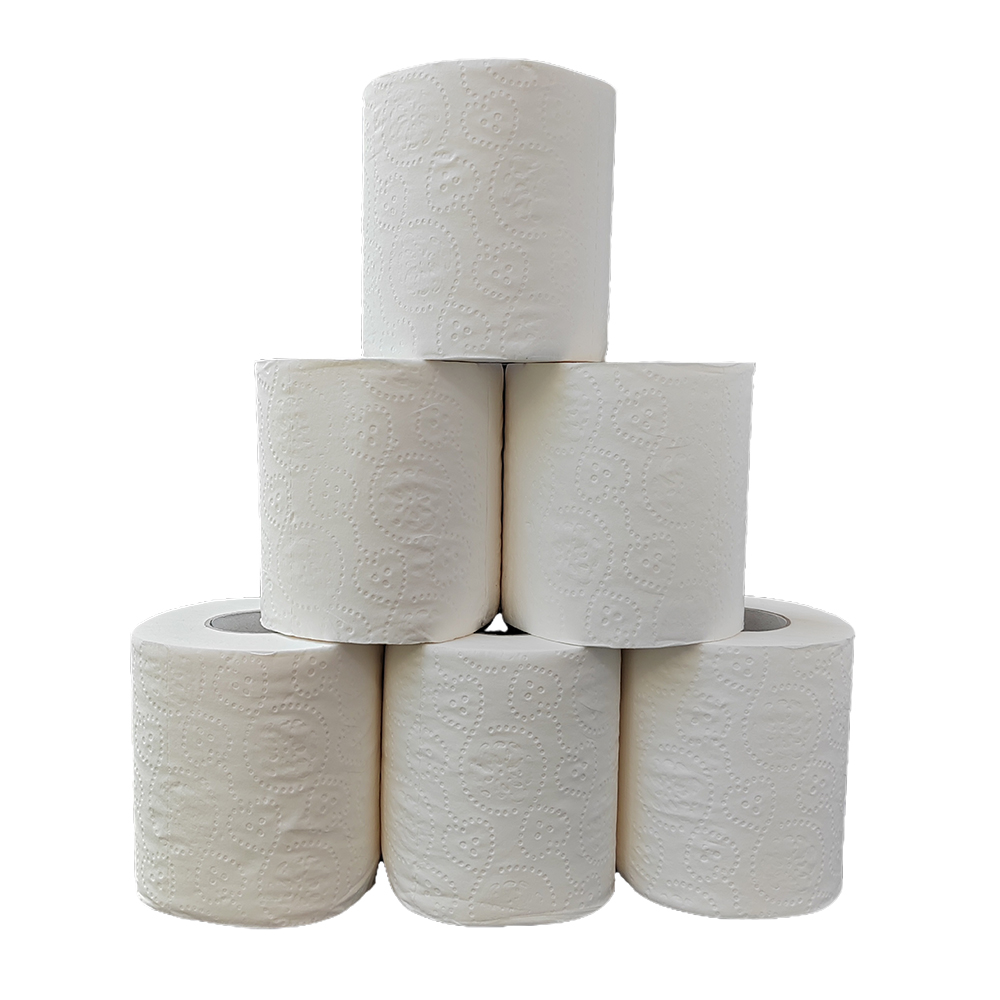
If you are facing a shortage or conducting an educational experiment, you can manufacture toilet tissue using a "kitchen blender" method. However, this process yields a product closer to artisanal stationery than Charmin. It is a labor-intensive process that results in a functional, albeit rudimentary, hygiene product.
This method recycles existing paper fibers. Since you cannot easily digest raw wood chips at home safely, you must rely on paper that has already been processed. This means the fibers have already been cut and dried once, so the resulting paper will be weaker and less soft than virgin pulp tissue.
Success depends heavily on the paper you choose to recycle. Not all paper is safe or suitable for contact with sensitive skin.
Acceptable Materials: White office paper is the best base as it has already been bleached and refined. Newspaper works but will result in gray, ink-stained paper that may transfer to skin. Non-glossy junk mail is also a viable source of fiber.
Materials to Avoid: You must be selective. Avoid glossy thermal receipts, as they often contain BPA (Bisphenol A). Do not use pizza boxes or food wrappers due to grease contamination, which ruins the pulp bond. Avoid sticky notes or envelopes with plastic windows, as the glues and plastics gum up the pulp and your equipment.
The Soak: Preparation requires patience. The paper must be shredded into small strips and soaked in warm water for at least 24 hours. This long soak is necessary to weaken the hydrogen bonds between the fibers, allowing them to be re-blended into a smooth pulp.
Once the paper is thoroughly saturated, the physical work begins. You are essentially acting as the hydropulper in a commercial mill.
Pulping: Place the soaked paper into a blender with plenty of fresh water. Blend on high until it reaches a smoothie consistency. There should be no distinct flakes left; it should look like a cloudy soup.
Forming: Pour the pulp onto a flat mesh screen (a splatters screen or a window screen frame works well). Alternatively, you can pour it onto a clean cotton towel. The goal is to spread it as thinly as possible. Thick paper will be cardboard-like and unusable.
Drying: Use heavy sponges or a rolling pin to press out as much water as possible. This compresses the fibers. Follow this by air drying in the sun or, for faster results, ironing the paper (place a cloth between the iron and the paper) to dry and sterilize it.
Before you commit to making a week's supply, understand the limitations of the output.
Texture: The result is often stiff and crinkly, a texture known in DIY circles as "air-dried crunch." Without the chemical softeners and creping blades of industrial machines, the fibers bond tightly and rigidly.
Absorbency: Homemade paper typically has lower absorbency than commercial toilet tissue. Commercial brands use embossing to create voids that hold liquid; homemade paper is usually flat and dense, causing liquid to run off rather than soak in.
Scale: It takes significant time and effort to produce a single roll equivalent. You might spend an hour of active labor to create enough paper for one or two days of usage, making it an inefficient survival strategy compared to stockpiling.
For those asking "how to make toilet tissue" due to environmental concerns or supply security, fabric alternatives (often called "Family Cloth") offer a more practical high-volume solution than paper pulping. This method bypasses the complex chemistry of paper production entirely, opting instead for the laundry loop.
While the concept may seem foreign to modern Western households, cloth wipes are standard in many cultures and are essentially identical to using cloth diapers for infants. They provide a superior return on investment (ROI) because they are infinitely reusable and do not require constant manufacturing of new stock.
The comfort of Family Cloth depends entirely on the fabric chosen. You want a material that is soft, durable, and highly absorbent.
Flannel: This is the gold standard for DIY wipes. 100% cotton flannel is inexpensive, soft against sensitive skin, and becomes more absorbent after the first few washes.
Upcycled Cotton: If you cannot buy new fabric, upcycling is effective. Old t-shirts (jersey knit) do not fray and are very soft. Well-worn cotton bed sheets are also excellent; cut them into 8x8 inch squares.
Fabrication: If using woven fabrics like flannel or sheets, the edges will fray in the wash. You must use pinking shears (zigzag scissors) to cut them, or use a zigzag stitch on a sewing machine to hem the edges. This prevents the wipes from turning into a ball of loose threads in the dryer.
The success of a reusable system lies in the logistics of handling dirty cloths without mess or odor.
Storage: Do not store soiled cloths in open bins. Used cloths are placed in waterproof "wet bags" (commonly used for cloth diapers) or lidded bins kept next to the toilet. These bags lock in odors effectively.
Hygiene Protocol: The modern system minimizes contact. When the bag is full, it is emptied directly into the washing machine. You push the bottom of the bag into the washer drum, turning it inside out, without ever handling the soiled cloths directly.
Sanitization: Hygiene is non-negotiable. This requires a "Hot Wash" cycle with heavy-duty detergent every 3–4 days. Cold water washes are insufficient for sanitizing fecal matter. Adding an extra rinse cycle ensures all detergent is removed to prevent skin irritation.
Switching to cloth is rarely a logistical challenge; it is almost always a psychological one.
The "Ick" Factor: It requires a household mindset shift regarding handling biological waste. However, parents who have cloth-diapered children often find the transition seamless.
Guest Considerations: It is generally accepted etiquette that guests are not expected to participate in the Family Cloth system. Most households maintain a supply of standard paper toilet tissue for guests while using cloth personally to save money and resources.
This is the most critical decision factor. Commercial toilet tissue is engineered to disintegrate rapidly in water. DIY alternatives are not. Neglecting this fact can lead to thousands of dollars in plumbing repairs.
Standard toilet paper is designed with short fibers and weak bonds that break apart the moment they hit water. Copy paper, newspaper, and even homemade recycled paper utilize longer fibers and stronger bonds intended to hold the sheet together. When these materials enter your pipes, they act very differently.
You can verify this safety risk with a simple experiment at home. Take two jars of water. Place a few sheets of commercial tissue in one, and your DIY alternative in the other. Shake both for ten seconds.
Commercial TP: Breaks apart into a cloud of fibers within seconds of agitation. The water becomes cloudy, and no large pieces remain. This flows easily through pipes.
DIY Recycled Paper: Often remains in clumps or sheets because the fibers are longer and bonded differently. It may soften, but it retains its structure.
Crisis Papers (Newspaper/Phone Books): These do not dissolve at all. They remain as solid sheets that can easily bridge gaps in pipes and catch on roots or rough edges.
Based on the dissolvability test, the rules for disposal change drastically when you move away from commercial tissue.
Septic Systems: These are biological digesters. Homemade paper and alternative papers can form sludge layers that do not break down, potentially ruining septic drain fields. The cost of replacing a drain field is astronomical compared to the cost of tissue.
City Sewer: Even if it flushes out of your bowl, DIY paper can contribute to "fatbergs" or localized clogs in your lateral line (the pipe connecting your home to the street).
Verdict: If you make your own paper or use newspapers, you must use a waste bin for disposal, similar to how diaper systems work or how plumbing is managed in regions with narrow pipes (like parts of Greece or South America). Never flush DIY paper.
When deciding between manufacturing your own hygiene products versus stocking up on commercial goods, it helps to look at the Total Cost of Ownership (TCO) and daily impact.
| Feature | Commercial Tissue | DIY Recycled Paper | Family Cloth (Reusable) |
|---|---|---|---|
| Monetary Cost | High recurring cost | Low material cost | Moderate upfront / Low recurring |
| Labor Input | Zero | High (Hours per roll) | Moderate (Laundry time) |
| Comfort (Softness) | High (Optimized) | Low (Abrasive) | Very High (Fabric dependent) |
| Plumbing Safety | Safe (Flushable) | Unsafe (Do NOT Flush) | Unsafe (Do NOT Flush) |
| Waste Generation | Moderate | Low (Recycles waste) | Zero Waste |
Commercial tissue represents a "pay for convenience" model. You pay a premium to avoid labor. DIY paper flips this; the monetary cost is near zero if you scavenge paper, but the labor cost is incredibly high. If you value your time at even minimum wage, DIY paper is the most expensive option. Reusable cloth sits in the middle; there is an upfront cost for fabric and a recurring low cost for water and electricity, but over 2-3 years, it is the cheapest financial option.
Commercial tissue is chemically optimized for hygiene and comfort. DIY paper is functional but often feels like "camping gear"—acceptable in a crisis but unpleasant for daily life. Cloth enthusiasts often argue that flannel is actually softer and more effective than paper, offering a higher quality of life once the psychological barrier is broken.
While it is technically possible to make toilet tissue paper at home using recycled scraps and a blender, it is rarely a practical solution for daily life due to the harsh texture and the risk it poses to modern plumbing. The industrial process involves sophisticated chemistry—specifically digestion and bleaching—that creates a product unique in its ability to be both strong in use and weak in water.
For those in a true survival situation, scavenging paper is easier than making it—provided you do not flush it. For those seeking sustainability or independence from supply chains, the "Family Cloth" method offers a superior return on investment compared to DIY paper making. However, for septic safety and hygiene convenience, the complex industrial process of digesting and bleaching wood pulp remains the unrivaled standard. When choosing your method, always prioritize the health of your plumbing system, as the cost of a sewer backup far exceeds the price of a premium pack of tissue.
A: Generally, no. Homemade paper usually lacks the short-fiber structure and air-pockets that allow commercial tissue to disintegrate instantly. Flushing homemade paper significantly increases the risk of clogging your pipes or damaging your septic system. It is safer to dispose of it in a waste bin.
A: If you must make paper, use pre-soaked white office paper or newsprint. These fibers are easier to pulp than cardboard. If you are looking for a reusable cloth alternative, 100% cotton flannel is the industry standard for softness and absorbency.
A: Bleaching is not just for whitening; it removes lignin, a natural substance in wood that makes paper rigid and turns it yellow over time. Removing lignin makes the tissue softer and more shelf-stable, ensuring it doesn't degrade before use.
A: A good rule of thumb is 40–50 wipes per person. This quantity allows for a comfortable rotation between wash cycles, assuming you wash the collection bag every 3–4 days. This buffer ensures you never run out while a load is in the laundry.