
Views: 0 Author: Site Editor Publish Time: 2026-09-02 Origin: Site


Have you ever assumed every single toilet seat is exactly the same? This common misconception causes significant headaches for facility managers and homeowners alike. Assuming all toilet seat covers are uniform leads to wasted procurement budgets, damaged hardware, and compromised facility hygiene. Clarifying the terminology is your crucial first step in fixing this problem. "Seat cover" actually refers to two completely distinct products. It can mean permanent structural hardware, like heavy lids and seats. It can also refer to consumable sanitary barriers, like a paper toilet seat cover. Neither category offers a genuinely universal fit across all global markets. In this article, you will learn the exact sizing frameworks for both permanent fixtures and disposable options. We will give you the knowledge you need to make accurate purchasing decisions. You will also discover how to evaluate vendors effectively based on exact specifications rather than guessing.
We must clearly separate the evaluation criteria for two highly distinct product types. Permanent toilet lids serve as structural hardware. Sanitary barriers operate as daily consumables. People constantly confuse these two realms when discussing a specific toilet seat cover size. Hardware dictates the physical, rigid seat bolted directly to the ceramic bowl. Consumables dictate the thin paper barriers users place on top for daily hygiene protection.
Relying on guesswork creates serious financial and operational risks for your facility. Mismatched hardware inevitably leads to catastrophic hinge failure. Seats will shift under human weight and eventually snap under uneven pressure. Mismatched paper covers cause equally frustrating daily issues. They lead to frequent dispenser jams, massive plumbing blockages, and an incredibly irritating user experience. A jammed paper dispenser often results in patrons tearing the sheets in frustration, defeating the sanitary purpose entirely.
Buyers must take immediate decision-stage action. You must rigorously audit your existing ceramic bowl shapes before buying replacement lids. Furthermore, you must also carefully measure your commercial dispensers before evaluating new paper consumable suppliers. Taking these proactive steps prevents expensive return shipments and eliminates unnecessary operational downtime in busy commercial restrooms.
Standard ceramic toilet bowls follow remarkably strict global manufacturing frameworks. They divide primarily into round and elongated shapes. Round bowls measure approximately 16.5 inches from the mounting holes down to the front rim. They fit exceedingly well in small residential spaces or compact apartments. Elongated bowls measure approximately 18.5 inches. Manufacturers intentionally design them for commercial compliance and significantly enhanced ergonomic support. Knowing these standard toilet seat cover dimensions ensures your newly purchased hardware seats rest perfectly balanced on the bowl edge.
We must also carefully consider the bolt spread standard. In North America, the standard mounting hole distance is strictly locked at 5.5 inches. European and Asian models often vary considerably. They typically span anywhere from 130mm to 170mm. You must align these critical measurements before authorizing any large-scale purchase of replacement hardware. Ignoring the bolt spread guarantees an impossible installation.
You also face the important choice between proprietary and third-party replacements. Using aftermarket covers on proprietary bowls poses distinct structural risks. Specific high-end Toto or Kohler models often feature uniquely sloped ceramic rims. Third-party options remain incredibly cost-effective for tight budgets. However, they must match the exact contour of your bowl perfectly. A poor fit causes invisible stress fractures in the plastic over time, leading to premature cracking. If your ceramic bowl features a square or highly customized D-shape, do not attempt to force a standard elongated seat onto it. The overhang will look terrible and create severe pinch points for users.
Follow this simple 3-step checklist to measure accurately and prevent high return rates:
Comparison Table of Permanent Hardware Parameters
| Ceramic Bowl Type | Average Measured Length | Standard Bolt Spread (North America) | Primary Use Case |
|---|---|---|---|
| Standard Round | 16.5 inches | 5.5 inches | Compact bathrooms, high-density residential |
| Standard Elongated | 18.5 inches | 5.5 inches | Commercial facilities, ADA-compliant stalls |
| Proprietary (e.g., D-Shape) | Varies by manufacturer | Varies by specific brand | Modern architectural and luxury designs |
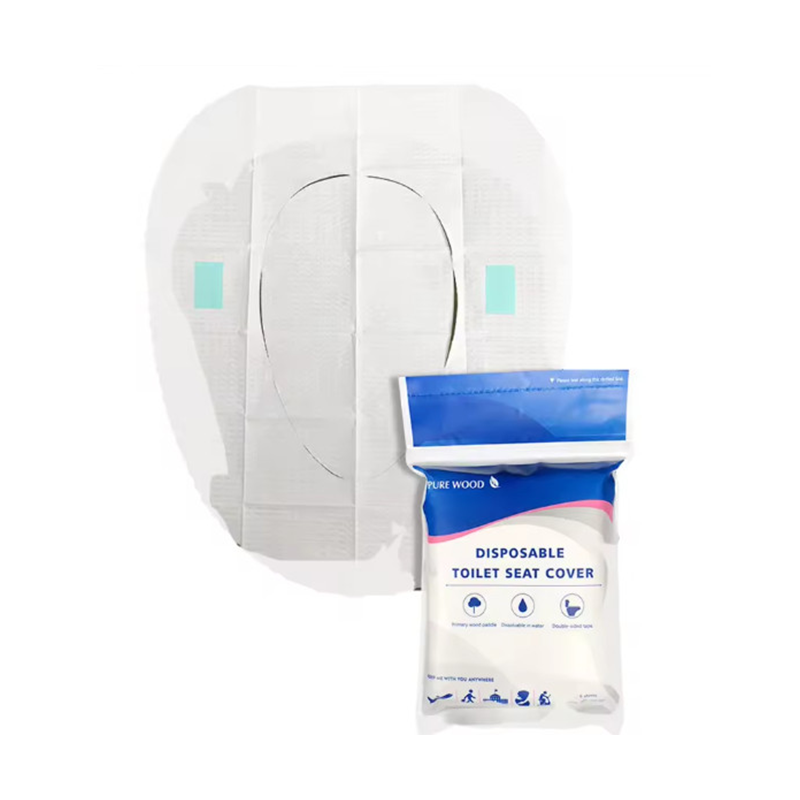
The physical layout of a paper sanitary cover dictates its packaging geometry. It also strongly determines exactly how it fits into your wall-mounted dispenser. The correct disposable toilet seat cover size depends heavily on the specific fold standards used by your facility.
Commercial fold standards typically fall into two highly regulated categories:
We must also look closely at unfolded coverage area specifications. Once deployed, a standard commercial cover generally measures 14 to 17 inches wide. It stretches roughly 16 to 18 inches long. This generous footprint allows it to drape effectively over both round and elongated bowls. The center flap usually drops into the water, pulling the entire sheet away securely during the flush cycle. A smooth extraction process directly correlates with perceived restroom cleanliness. If users struggle to pull a single sheet, they usually grab clumps. This wastes valuable inventory and scatters debris across the floor. Understanding your precise dispenser measurements prevents this chaotic scenario.
Plumbing compliance represents a massive implementation risk for facility managers. You must explicitly ensure the size and thickness of the paper do not exceed your facility's internal flushability limits. Septic systems handle fibrous paper very differently than aggressive municipal commercial sewage lines. Thick, oversized paper covers can quickly overwhelm older building pipes. Always verify your underground infrastructure before arbitrarily switching to a heavier grade of paper.
When people leave their controlled home environments, they desperately want reliable sanitary protection. Travel toilet seat covers prioritize pocket-sized, ultra-compact dimensions over standard wall-dispenser compatibility. Manufacturers typically package and seal them individually. A fully folded travel cover measures a mere 3 inches by 4 inches. This makes it incredibly easy to slip into a purse, diaper bag, or travel backpack.
Material differences distinctly set them apart from standard commercial paper. Travel varieties often incorporate a significantly larger unfolded footprint. They utilize an oversized drape to aggressively shield users from unpredictable public restroom surfaces. Many also feature a highly water-resistant, non-flushable protective backing. This backing typically combines a thin PE film with soft, absorbent pulp. It thoroughly protects against damp surfaces but absolutely requires responsible disposal in a trash bin rather than the toilet bowl.
Retailers and procurement officers must weigh these purchasing considerations carefully. If you actively source products for retail pharmacy shelves or high-end hospitality amenity kits, you face a distinct balancing act. You must expertly evaluate the balance between the unfolded coverage area and the strict requirement for individual sanitary packaging. Larger covers provide vastly superior user protection but notably increase the physical bulk of the folded packet. Focus relentlessly on the end-user experience. Unpredictable public restroom variables demand highly durable, easily deployable protective solutions.
Choosing the right supply partner directly determines the long-term success of your restroom hygiene maintenance program. Reliable sizing consistency and rigorous physical tolerance are paramount to daily operations. Top-tier manufacturers consistently maintain incredibly strict dimensional tolerances. This precise engineering ensures your paper covers do not jam standard dispensers. In the hardware realm, strict tolerance guarantees lids align perfectly with their metal hinges.
You should heavily evaluate material sourcing and EEAT (Experience, Expertise, Authoritativeness, Trustworthiness) credentials when screening suppliers. Look closely for internationally recognized ISO certifications and FSC-certified paper pulp origins. Independent flushability testing proves critical to seamlessly mitigate facility plumbing risks. Organizations like INDA and EDANA set immensely strict, science-backed guidelines for what breaks down safely in modern sewer systems. A reputable toilet seat cover manufacturer will gladly provide these comprehensive testing reports upon initial request.
Always scrutinize customization capabilities and production scalability. Can the factory adjust the final cut size for custom OEM dispensers? Brand-specific commercial washrooms frequently feature proprietary, flush-mounted wall units. Can they reliably scale their paper production for massive enterprise facility management contracts? Your chosen vendor must clearly demonstrate the mechanical capacity to grow right alongside your expanding business operations. They should easily accommodate sudden surges in seasonal product demand without compromising fold quality or paper integrity.
Toilet seat covers—whether robust plastic hardware or flushable paper sanitary sheets—are highly specific to the bowl or dispenser they pair with. Treating them as universally interchangeable products guarantees poor fits, damaged components, and perpetual maintenance headaches. Precision and compatibility matter immensely in facility procurement.
Here are your crucial next steps for purchasing. For permanent hardware, rigorously audit your exact bowl length and horizontal bolt spread before executing a purchase. Take physical tape measurements rather than guessing based on visual estimates. For sanitary consumables, explicitly verify your existing commercial dispenser specifications. Determine conclusively if you require half-fold or quarter-fold sleeves. Always request physical sample sleeves directly from the manufacturer. You should thoroughly test extraction smoothness and plumbing flushability on-site before finalizing any massive bulk orders. Proper verification saves significant capital and ensures fully hygienic, continuously functional facilities.
A: No, as long as the standard dimensions (round/elongated) and bolt spread (5.5 inches) match. However, proprietary shapes (D-shape, square) strongly benefit from brand-matching for exact aesthetic and structural alignment.
A: Yes. Most commercial paper covers are cut with a flexible center flap and sufficient length (up to 18 inches) to accommodate both standard round and elongated bowls without tearing.
A: Check your procurement requirements. If buying half-fold covers (most common), you need a standard 16" x 11" dispenser. If space is limited, opt for a quarter-fold dispenser and compatible refills.