
Views: 130 Author: Site Editor Publish Time: 2026-09-07 Origin: Site


Commercial kitchens operate under strict margins and rigorous hygiene standards. Relying on consumer-grade cleaning products leads to rapid depletion, excessive waste, and potential health code violations. Procurement managers and restaurant operators struggle to balance upfront case costs with actual cost-in-use. They often select products that fail under heavy operational demands or cause cross-contamination risks during food preparation.
Selecting the optimal Paper towel requires a technical evaluation of material strength, dispensing formats, station-specific applications, and strategic wholesale sourcing. A structured approach to procurement ensures operational efficiency and strict compliance with food safety regulations.
Format Dictates Function: Match the paper towel format (hardwound roll, center-pull, or multifold) to the specific kitchen station (handwashing vs. prep areas) to minimize waste.
Cost-in-Use Trumps Case Price: High-capacity, highly absorbent towels reduce the number of sheets required per task, lowering long-term operational costs despite potentially higher upfront wholesale prices.
Dispenser Compatibility is Critical: Avoid proprietary dispenser "lock-in" unless the vendor provides significant service value; universal formats offer more flexibility when switching suppliers.
Sourcing Strategy Matters: Partnering directly with a reliable paper towel manufacturer or specialized distributor ensures consistent inventory, quality control, and access to bulk pricing.
Evaluating paper products for a professional kitchen goes far beyond checking the price per case. You must assess the physical properties of the paper to ensure it holds up to the rigorous demands of a commercial food service environment. Kitchen staff push materials to their breaking point daily. If a sheet tears while wiping down a hot flat-top grill, it slows down service and frustrates the line cooks.
Kitchen spills involve large volumes of water, viscous syrups, and heavy cooking oils. A standard consumer towel disintegrates instantly under these conditions. You need products engineered with long-fiber paper construction. These long fibers interlock tightly, preventing the sheet from falling apart during heavy-duty scrubbing on stainless steel prep tables or flat-top grills. A reliable benchmark for commercial absorbency is the capacity to hold up to 1/4 cup of liquid per sheet without tearing or dripping. Towels meeting this standard drastically reduce the number of sheets a line cook needs to manage a single spill.
Test the sheet by saturating it with warm water and wringing it out.
Stretch the damp sheet across a standard prep pan to check tensile strength.
Wipe a grease-coated surface to see if the fibers pill or leave residue.
Measure how many sheets it takes to absorb a standard 8-ounce spill.
Maintaining strict Hazard Analysis Critical Control Point (HACCP) compliance requires minimizing bacterial transfer vectors. Single-use paper products play a fundamental role in this mitigation strategy. Unlike reusable linen cloths, which can harbor and spread pathogens if not submerged in perfectly calibrated sanitizer buckets, a fresh paper sheet guarantees a sterile start for wiping down a cutting board after processing raw poultry. Disposable sheets eliminate the risk of cross-contamination between prep stations, protecting both guests and the restaurant's reputation.
The surface texture of a towel dictates its physical scrubbing power. Manufacturers utilize specific surface embossing techniques, such as diamond-weave or honeycomb patterns, to alter the paper's performance. These patterns increase the overall surface area of the sheet. This expanded surface area improves liquid retention and creates physical pockets that trap dirt, grease, and food particles. When dealing with dried-on kitchen messes, an embossed texture provides the necessary friction to lift debris without requiring excessive chemical solvents.
While heavy-duty scrubbing power is necessary for equipment maintenance, it must be balanced with skin comfort at handwashing stations. Kitchen staff wash their hands dozens of times per shift. If the provided towels are overly abrasive, employees may unconsciously avoid frequent hand hygiene, directly compromising food safety. Selecting a softer, less aggressive texture for dedicated handwashing sinks ensures compliance with hygiene protocols while reserving the heavy-duty embossed sheets for equipment and surface cleaning.
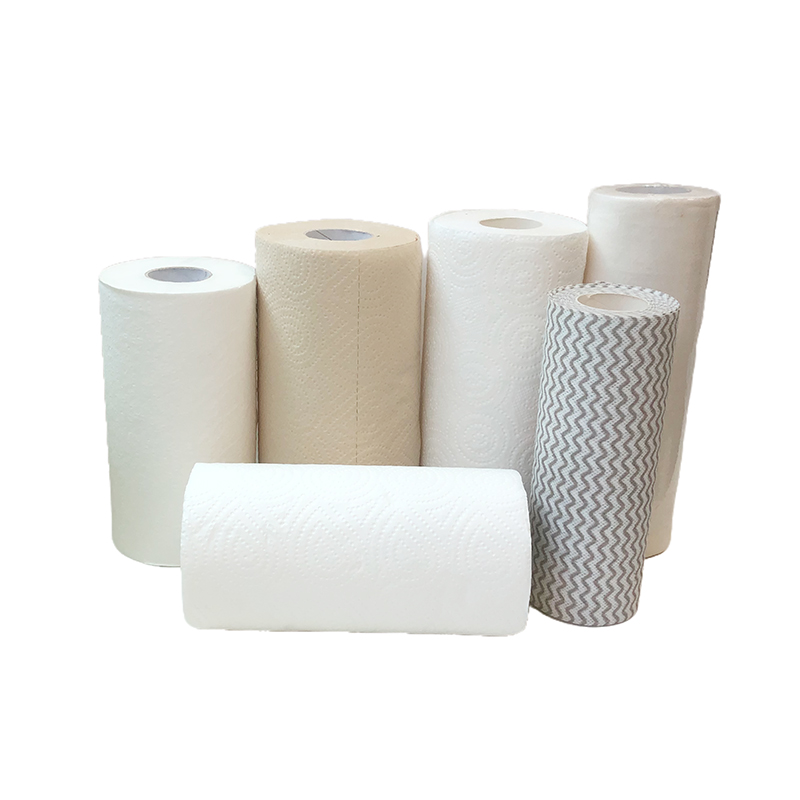
Deploying the wrong dispensing format at a specific workstation guarantees excessive waste and operational friction. You must match the physical format of the roll to the exact workflow of the employees using it. A busy dish pit requires a completely different setup than a quiet front-of-house server station.
High-capacity hardwound rolls are dense, continuous rolls designed for maximum footage. They are the optimal choice for high-traffic employee handwashing stations and high-volume washrooms. The primary efficiency of continuous rolls lies in reducing refill frequency, freeing up maintenance staff for other duties. However, to maximize their value, they require automated or mechanical dispensers. These dispensers control the sheet length distributed per pull, preventing users from grabbing excessive amounts of paper to dry their hands.
Center-pull rolls dispense sheets from the inside out through a centralized nozzle. This format is heavily favored for active food prep stations and line cooking areas. The distinct advantage of a center-pull system is one-handed dispensing. A chef holding a knife or a pan can easily grab a single sheet without touching the dispenser housing. This touchless interaction prevents cross-contamination from raw ingredients on the user's hands to the dispenser surface, maintaining a sanitary environment at the most critical points in the kitchen.
Folded towels are stacked individually and dispense one at a time. They are best suited for front-of-house areas, tight spaces, guest restrooms, or low-volume handwashing sinks where installing a large wall-mounted unit is impractical. The primary operational risk with folded towels is "bunching." Users often pull multiple sheets at once, or a clump of towels falls out of the dispenser simultaneously. This drastically increases waste and drives up the cost-in-use. Proper loading techniques and appropriately sized dispensers mitigate this risk.
Pre-perforated sheets limit individual sheet size, making them ideal for precision-based prep stations and light cleaning tasks. By forcing a specific tear point, perforated rolls prevent unnecessary square-footage waste for minor spills. Conversely, continuous sizing allows the user to determine the exact length needed. This flexibility is highly beneficial for large-scale back-of-house cleanup, where a massive spill might require three feet of continuous paper to absorb effectively.
A single type of paper product cannot efficiently handle every task in a professional kitchen. Segregating your inventory based on specific applications improves performance and controls spending. Using premium embossed sheets to wipe up a water spill on the floor burns through your budget rapidly.
Heavy Spill and Grease Absorption: Utilize dense, highly porous multi-ply sheets built to retain viscous liquids and cooking oils without dripping. These are essential near deep fryers and flat-top grills.
Surface Preparation and Sanitizing: Deploy chemical-resistant sheets that do not neutralize or react with sanitizing solutions, such as quaternary ammonium compounds. These sheets must remain structurally intact when soaked in surface cleaners for extended periods.
Glass, Polish, and Delicate Finishes: Stock low-lint, non-abrasive single-ply or microfiber-blend paper options for front-of-house staff. These prevent streaks, scratches, and fiber residue on glassware, plates, and stainless steel expo lines.
Kitchen Task | Recommended Towel Type | Key Performance Metric |
|---|---|---|
Deep Fryer/Grill Cleanup | Multi-ply, heavily embossed | Maximum oil retention, heat resistance |
Prep Table Sanitization | Chemical-resistant single-ply | Wet strength, non-neutralizing fibers |
Glassware Polishing | Low-lint, non-abrasive | Streak-free finish, zero fiber residue |
Employee Handwashing | Hardwound roll (metered) | Tactile softness, rapid moisture wicking |
Understanding the raw materials and manufacturing processes behind your paper products allows you to make informed decisions regarding durability, cost, and environmental impact. The physical makeup of the sheet dictates how it performs under pressure.
The structural integrity of a towel heavily depends on its ply count. Multi-ply towels bond two or more layers of paper together, creating air pockets that significantly boost absorbency and thickness. High-density single-ply options rely on tighter fiber weaving for strength but generally hold less liquid. While multi-ply options carry a higher cost per roll, the thicker towel often results in lower overall consumption per spill. Staff use fewer sheets to achieve the same result, effectively offsetting the higher initial purchase price.
Procurement teams must evaluate the trade-offs between meeting corporate sustainability goals and maintaining maximum wet strength. Towels made from post-consumer recycled content divert waste from landfills and appeal to eco-conscious consumers. However, the recycling process shortens the paper fibers, which can reduce the overall tensile strength and absorbency of the final product. Towels manufactured from virgin fibers offer superior durability and liquid retention, making them the preferred choice for the most demanding back-of-house applications.
The choice between white (bleached) and brown (kraft) paper involves both aesthetic and environmental considerations. Unbleached kraft towels require less chemical processing during manufacturing, reducing their environmental footprint. This aligns well with restaurants promoting a natural or sustainable brand identity. Bleached towels undergo chemical treatments to achieve a bright white appearance, which many operators prefer because it easily shows dirt and ensures a surface has been wiped completely clean.
The debate between single-use paper and reusable cotton or microfiber cloths centers on hygiene and operational economics. Reusable cloths present significant cross-contamination vectors if not laundered and sanitized perfectly between uses. Bacterial growth in damp cloths is a major health inspection failure point. When weighing operational economics, the direct cost of disposable commercial paper towels must be compared against the laundry utility costs, chemical detergents, labor hours, and eventual physical degradation associated with cloth alternatives. For high-risk contact areas involving raw proteins, single-use paper remains the safest and most efficient choice.
Securing reliable inventory at favorable margins requires a strategic approach to purchasing. Moving beyond local retail suppliers and establishing direct wholesale channels protects your bottom line. You need a supply chain that scales with your operational volume.
Calculating the true cost-in-use is mandatory for accurate financial forecasting. Simply comparing the price per case is misleading. You must divide the price per foot or sheet by the average usage rate. A cheaper case of thin paper will deplete twice as fast as a slightly more expensive case of highly absorbent paper. When buying kitchen paper towel wholesale, tiered volume purchasing impacts your unit pricing. Ordering in bulk pallets reduces the per-unit cost but requires factoring in shipping rates and the physical warehouse storage costs required to hold the inventory.
Establishing direct relationships with a paper towel manufacturer or a tier-one distributor builds supply chain resilience. Direct partnerships help you avoid stockouts during regional supply chain disruptions. Furthermore, working directly with the source allows for strict quality assurance. You can request detailed specification sheets detailing basis weight, tensile strength, and absorbency capacity before committing to a long-term bulk contract, ensuring the product meets your exact operational standards.
For operations where supplies are highly visible to guests, investing in custom paper towel rolls offers a unique branding opportunity. Open-concept kitchens, food trucks, and high-end catering operations benefit from printed logos or specific sizing that matches their aesthetic. Evaluating the return on investment for custom printing involves weighing the increased unit cost against the brand integration and elevated guest perception it provides.
Even the best procurement strategy fails if the products are deployed incorrectly or mismanaged by the staff. Anticipating operational risks ensures your investment yields the expected returns. You must train your staff on proper usage and maintain your dispensing hardware.
Many vendors offer "free" proprietary dispensers in exchange for signing a long-term paper contract. This locks the kitchen into purchasing exclusively from one highly-priced manufacturer. If their quality drops or prices surge, you cannot switch suppliers without replacing all the hardware. Standardize on universal dispensers wherever possible. If you must use proprietary equipment, negotiate strict service-level agreements that justify the lock-in, ensuring guaranteed delivery times and fixed price ceilings.
Employees often use excessive amounts of paper products for tasks better suited to specialized wipes or floor squeegees. Using half a roll of paper to mop up a massive floor spill is a severe waste of resources. Implement touchless, metered dispensers that delay the release of a second sheet. This mechanical limitation naturally curbs over-consumption and forces staff to use the appropriate tools for massive cleanups.
Ordering bulk supplies without adequate storage leads to product degradation. Paper absorbs ambient moisture; storing pallets in damp basements or near dishwashing stations ruins the structural integrity of the rolls before they are even used. Calculate your exact monthly burn rates to optimize delivery schedules. Establishing a Just-in-Time inventory system with your wholesale partners minimizes the required dry, pest-free storage space while ensuring you never run out of critical supplies.
Audit current paper waste levels across all kitchen stations to identify areas of over-consumption.
Measure existing dispenser dimensions and core requirements to ensure compatibility before ordering new inventory.
Calculate your true cost-in-use based on linear footage rather than just the case price.
Request sample rolls and detailed specification sheets from shortlisted suppliers for an active trial period on the line.
A: Commercial options are engineered for industrial environments. They feature higher wet strength, longer continuous roll formats, and bulk packaging designed to fit high-capacity dispensers, whereas regular towels are optimized for light residential use.
A: Divide the total case cost by the total linear feet or total number of sheets. Then, factor in the average number of sheets an employee uses per task to determine the actual financial impact of the product.
A: Yes. Center-pull systems allow for one-handed dispensing without touching the external housing. This prevents cross-contamination from raw ingredients on a chef's hands to the dispenser surface.
A: Not always. While universal rolls fit many standard dispensers, proprietary dispensers use specific hub sizes or internal mechanisms designed to accept only their brand's specific core dimensions.
A: Generally, yes. Buying directly bypasses distributor markups. However, you must meet high volume thresholds and account for pallet shipping costs and warehouse storage space.
A: 2-ply or densely embossed single-ply options perform best. The multiple layers or embossed pockets physically trap grease, lock in moisture, and provide the necessary scrubbing power for heavy spills.
A: They pose high risks. HACCP guidelines require strict wash sanitization for reusable cloths. Single-use paper remains the safest, most compliant path for high-risk contact areas to prevent bacterial cross-contamination.