
Views: 0 Author: Site Editor Publish Time: 2026-11-21 Origin: Site


Picture a Saturday night dinner rush. The ticket machine buzzes relentlessly. The grill is fully loaded. Suddenly, a quart of hot fryer oil spatters across the primary prep station. In these high-stakes moments, reaching for a flimsy paper towel slows your brigade down. Using the wrong wiping materials causes excessive operational waste. It compromises strict hygiene protocols. Furthermore, it demands frustratingly frequent dispenser refills right when your team needs to focus on plating.
Procurement officers and restaurant managers must navigate the complexities of purchasing the right paper products for back-of-house operations. This comprehensive guide breaks down the technical specifications required to optimize your kitchen's workflow.
Absorbency is Key: Look for textured surfaces to maximize liquid and grease retention. This specific manufacturing technique significantly reduces the number of sheets needed per spill. It optimizes overall consumption.
Ply Dictates Durability: Upgrading to thicker rolls offers superior wet strength for heavy-duty scrubbing. Conversely, 1-ply alternatives are better suited for basic hand drying tasks.
Material Matters for Food Safety: Opt for premium virgin fibers to ensure high hygiene standards. High-quality virgin pulp prevents lint residue from contaminating food prep surfaces.
Roll Size Impacts Labor: Choosing the correct roll size minimizes maintenance time. High-capacity rolls reduce dispenser refill frequency during critical peak operational hours.
Procurement officers frequently miscategorize paper towels as generic consumables. They purchase based solely on the lowest case price. This represents a critical flaw in kitchen management. In a high-volume restaurant environment, these supplies function as precision tools. They dictate operational efficiency, staff safety, and food sanitation. Evaluating wiping materials requires a strategic engineering approach rather than a purely transactional one.
Buying cheaper towels often creates a false economy. Low-quality towels lack structural integrity. They fail to absorb liquids efficiently. Consequently, kitchen staff compensate by grabbing three or four sheets for a single task. A premium sheet handles this same task effortlessly. This elevated usage rate accelerates inventory depletion. It ultimately costs the restaurant more money over a fiscal quarter. Effective cost control relies on calculating the true cost-per-task rather than the deceptive cost-per-roll.
Health codes mandate strict sanitation protocols to prevent foodborne illnesses. Proper disposable towels mitigate the risks of cross-contamination far more effectively than reusable cloth rags. Cloth rags harbor bacteria if not laundered at precise temperatures. Disposable sheets provide a fresh surface for every wipe-down. This aligns seamlessly with Hazard Analysis Critical Control Point principles. It satisfies strict health inspector requirements for back-of-house cleanliness.
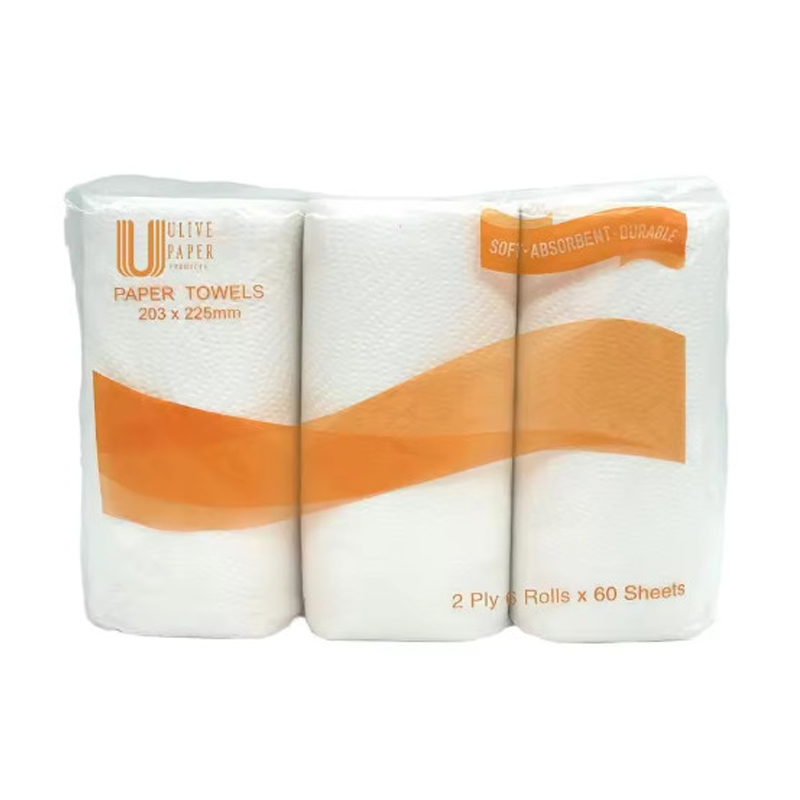
Recent market data indicates a sharp pivot in foodservice procurement. Driven by persistent labor shortages and elevated sanitation standards, operators are abandoning traditional open-roll formats. High-capacity dispensing systems now dominate new commercial kitchen build-outs. These automated solutions mitigate cross-contamination risks. Staff touch only the towel they use. Furthermore, manufacturers are engineering advanced virgin-pulp products. These modern solutions balance aggressive scrubbing power with sustainable forestry practices, ensuring facilities maintain compliance without sacrificing performance.
Absorbency remains the most critical performance metric for back-of-house operations. A commercial kitchen deals with high-viscosity liquids. Thick sauces and heavy fryer oils demand a product engineered for rapid absorption.
The physical structure of a paper towel dictates its liquid retention capacity. High-quality Embossed Kitchen Paper Towels feature textured, three-dimensional patterns stamped into the paper during manufacturing. This process is strictly functional. The embossing process creates microscopic pockets of air between the paper fibers. When a spill occurs, capillary action draws the liquid into these textured voids. The pattern acts like a network of tiny sponges. It channels heavy cooking oils and water away from the surface and locks them within the towel's core. Specifically, this structural engineering prevents liquids from simply pushing around the stainless steel prep table.
Towels must possess exceptional wet strength. This refers to the material's ability to maintain structural integrity when fully saturated. Commercial kitchens require towels that will not disintegrate when exposed to liquid and friction simultaneously. Staff apply significant downward pressure when wiping down sanitized prep tables. A towel with high wet strength resists shredding. It ensures the cleaning process remains efficient and leaves no frustrating paper debris behind.
Ply count refers to the number of individual paper layers bonded together to create a single sheet. Understanding these functional differences helps procurement managers match specific products to intended kitchen tasks. This prevents both underperformance and overspending.
Single-ply towels consist of one layer of paper. They are generally thinner and highly cost-effective for low-impact tasks. The primary use case for 1-ply towels involves high-traffic employee handwashing stations. Drying clean hands does not require heavy scrubbing power. Therefore, extra absorbent 1-ply products fulfill health code requirements without inflating the supply budget.
For demanding back-of-house cleaning, 2-Ply Kitchen Paper Towel Rolls are widely considered the industry gold standard. These rolls feature two layers of paper bonded together. Advanced manufacturing often utilizes specific patterns, such as butterfly embossing, to secure the layers. This double thickness provides a dual benefit. First, it exponentially increases the liquid holding capacity. Second, it acts as a thermal and chemical barrier. It protects staff members' hands from hot grease spatters and harsh chemical sanitizers. The upfront cost per roll is higher. However, the superior efficiency means staff require significantly fewer sheets per cleaning task.
Specification Metric | 1-Ply Commercial Towels | 2-Ply Premium Rolls |
|---|---|---|
Primary Application | Handwashing stations, light spills | Fryer stations, heavy grease, sanitizing |
Structural Design | Single layer, standard embossing | Dual layer, butterfly/deep embossing |
Wet Strength | Moderate | Maximum (resists shredding) |
Cost Efficiency | Lowest cost-per-roll | Lowest cost-per-task |
The raw materials used in paper manufacturing directly influence safety, texture, and performance. Pulp quality is a non-negotiable factor that impacts compliance and food integrity for buyers in the foodservice sector.
Premium Virgin Wood Pulp Kitchen Towels are manufactured using freshly harvested wood fibers. These fibers have never been processed into paper before. They retain their maximum length and tensile strength. This structural purity makes virgin pulp incredibly hygienic and inherently food-safe. Long virgin fibers bond tightly together. This makes the resulting towels highly resistant to linting. Leaving paper dust on cooking equipment constitutes physical contamination. Utilizing premium virgin pulp neutralizes this risk entirely.
Sustainability initiatives drive many restaurants toward recycled products. However, direct food contact applications demand careful consideration. Recycled paper contains previously used fibers. These fibers are inherently shorter and weaker from reprocessing. Consequently, they possess lower wet strength and shed easily when wet. In contrast, virgin wood pulp offers rapid absorbency. It remains the superior choice for heavy scrubbing, grease draining, and direct food prep.
Operational efficiency extends beyond material specifications. It includes how the product integrates into the kitchen's daily workflow. Roll size directly influences labor allocation.
Standard household-sized rolls contain 50 to 100 sheets. They are completely insufficient for commercial environments. They deplete too rapidly in a busy kitchen. High-volume commercial kitchens must implement jumbo rolls or center-pull roll systems. Center-pull dispensers pull single sheets from the core of the roll. This mechanism protects the remaining paper from airborne grease while offering hundreds of sheets per unit.
Labor remains one of the highest variable costs in the restaurant industry. Every minute a line cook spends retrieving a new roll of paper towels is a minute taken away from plating. Installing high-capacity hardwound rolls significantly reduces the frequency of dispenser changes. Minimizing these micro-interruptions yields measurable improvements in kitchen workflow.
Procurement decisions require empirical evidence. Restaurant managers should implement a practical testing framework to objectively evaluate their current paper towel supplier against prospective alternatives.
Measure exactly 2 ounces of room-temperature fryer oil. Pour it onto a clean stainless steel surface. Count precisely how many individual sheets are required to completely absorb the oil and leave the surface dry to the touch. A lower sheet count indicates superior capillary action.
Staff often grab towels with wet hands during a busy shift. Vigorously pull a sheet from your current dispenser using one wet hand. The towel should tear cleanly along the perforation. It must not shred, jam the dispenser, or require two hands to separate.
Apply a standard commercial degreaser to a stubborn sauce stain on a prep counter. Saturate a single paper towel with water and wring it out slightly. Scrub the stain aggressively. Evaluate whether the towel maintains its structure or disintegrates into useless paper pills. A commercial-grade towel must withstand aggressive friction.
Budget constraints are a permanent reality in the hospitality sector. Balancing cost and quality requires shifting focus from immediate invoice totals to long-term operational returns.
Relying solely on the cost-per-roll metric is a dangerous pitfall. A lower upfront price appears financially attractive on a monthly invoice. It rarely reflects the actual economic impact on the business. The true metric of operational efficiency is the cost-per-task.
When kitchen staff encounter a severe grease spill, their primary goal is rapid cleanup. If the facility stocks low-quality alternatives lacking proper absorbency, an employee instinctively pulls six to eight sheets. They do this to manage the spill and protect their hands from heat. Investing in premium multi-ply rolls allows the same employee to resolve the issue using only two sheets. This drastic reduction directly lowers inventory depletion rates.
Partnering with a reliable supplier is crucial for maintaining consistent inventory. Procurement managers should evaluate suppliers based on manufacturing standards and physical consistency. A reliable supplier provides uniform ply thickness, accurate sheet counts, and consistent embossing patterns across different production batches.
Implement a phased pilot program before committing to a massive bulk order. Select one high-traffic area, such as the primary fry station. Replace the existing paper towels with the new premium option for a two-week testing period. Monitor the depletion rate closely. Solicit direct feedback from the kitchen staff. This empirical approach removes guesswork and provides concrete data to justify a purchasing shift.
Yes, embossed variations are generally superior for commercial environments due to their enhanced physical structure. The embossing process uses heated rollers to stamp specific geometric patterns into the paper fibers. This creates microscopic air pockets between the layers. When the towel contacts spilled liquids or heavy fryer grease, these air pockets act like tiny sponges. They utilize capillary action to draw moisture inward quickly. Smooth towels tend to push grease across a stainless steel prep table rather than absorbing it.
Recycled paper products are an excellent, eco-friendly choice for employee restrooms. However, they are generally not recommended for direct food preparation areas. Recycled paper is manufactured from previously used fibers. These are inherently shorter and weaker than first-use materials. Consequently, they possess lower wet strength and are highly prone to leaving lint behind. Virgin wood pulp remains the industry standard for critical back-of-house tasks due to its unmatched purity.
The financial savings of thicker paper products come from a drastic reduction in overall consumption rates. Staff instinctively grab enough paper to protect their hands from moisture and heat during a spill. With thin towels, a worker might pull six to eight sheets. Bonded 2-ply towels offer double the thickness and exponentially higher absorbency per square inch. The same worker only needs one or two sheets to accomplish the identical task. This lowers total operational expenditure despite the higher price per roll.
Jumbo rolls or center-pull rolls are definitively the most efficient options for high-volume commercial kitchens. Standard household-sized rolls deplete far too rapidly during a busy dinner service. This forces kitchen staff to repeatedly stop their primary duties to locate replacements. Jumbo rolls hold several hundred feet of continuous paper. They ensure a single dispenser survives an entire shift without needing maintenance.
Wet strength refers to a paper towel's structural integrity when completely saturated with water, oil, or chemical sanitizers. Paper towels are rarely used dry in a commercial kitchen. If a towel has poor wet strength, it immediately dissolves or pills when rubbed against a textured surface. High wet strength ensures the paper fibers remain tightly bonded even when soaked. This allows staff to aggressively scrub countertops without the towel falling apart.
Absolutely. The type of dispenser installed in your facility plays a massive role in controlling inventory depletion. Open-roll dispensers often lead to excessive waste because a quick pull unravels far more paper than intended. Touchless automatic dispensers or highly regulated center-pull systems force a controlled release. They typically dispense one pre-measured sheet at a time. This psychological friction prevents staff from thoughtlessly grabbing massive handfuls of paper.
Center-pull dispensers feed paper from the inside core of the roll directly downward. This design fully encloses the roll in a plastic housing, protecting it from airborne grease and cross-contamination. Staff pull individual sheets through a specialized nozzle. Standard hardwound dispensers feed paper from the outside of the roll, often requiring a mechanical lever or motion sensor to advance the sheet. Center-pull systems are generally preferred in high-grease areas because they eliminate the need to touch any levers or buttons with dirty hands.
Consumption rates vary wildly based on the restaurant's footprint, menu type, and foot traffic. A mid-sized, full-service restaurant serving 300 covers a day can easily consume 4 to 6 high-capacity jumbo rolls (approximately 3,000 to 4,500 linear feet of paper) across the kitchen, bar, and restrooms. Fast-food operations with heavy fryer usage typically consume 20% to 30% more. Upgrading to highly absorbent, multi-ply sheets can reduce this daily volume by up to a third by improving the cost-per-use efficiency.
Selecting proper commercial kitchen paper towels boosts daily operational efficiency far beyond what a basic spreadsheet might suggest. Textured patterns trap heavy grease efficiently during busy shifts. Thicker rolls provide the necessary durability for demanding scrubbing tasks. Operators guarantee strict food safety compliance by prioritizing virgin wood pulp. Adopting larger roll sizes dramatically reduces frustrating dispenser refills. Balancing upfront costs with actual usage saves money over time. Smart procurement protects your staff, streamlines your workflow, and safeguards your bottom line. Visit Ulive Paper to explore our complete range of commercial wiping solutions and find the exact specifications your kitchen demands.