
Views: 0 Author: Site Editor Publish Time: 2026-09-19 Origin: Site


Rolling silverware is a labor-intensive daily task for front-of-house staff. Choosing the wrong napkin increases prep time, leads to tearing, and degrades the guest experience. Transitioning from linen to paper—or upgrading current paper stock—requires balancing unit costs, material durability, and brand presentation. We understand the pressure on restaurant operators to maintain high standards while streamlining operations.
This guide provides food and beverage operators and purchasing managers with an evidence-based framework. You will learn how to evaluate, shortlist, and source the ideal paper napkins for rolling silverware. We cover material performance, sizing geometry, and sourcing strategies to optimize your daily resets. By reading this guide, you gain practical insights into eliminating operational bottlenecks. You can finally equip your staff with materials designed for speed, hygiene, and flawless table presentation.
Front-of-house labor remains one of the highest expenses in hospitality. Roll-ups consume significant pre-shift and post-shift hours. Staff members spend valuable time wrapping forks, knives, and spoons into individual bundles. If the napkin material fails, staff must restart the process. This wastes both physical inventory and expensive hourly wages.
Pre-rolled silverware accelerates table resets during peak service. When a party leaves, bussers can instantly drop a fresh, sanitary roll onto the sanitized table. This method protects utensils from ambient contamination. It also signals to incoming guests a high standard of cleanliness.
Many operators debate the economics of paper versus linen. Linen napkins require commercial laundry contracts. These contracts often include hidden fees for lost items, water usage, and chemical processing. You also face the logistical headache of sorting damaged linens. Transitioning to premium restaurant paper napkins eliminates these unpredictable laundry fees. It provides a fixed, predictable unit cost for your accounting team.
To succeed, the ideal napkin must meet strict operational criteria. It must fold quickly without awkward creases. It needs to hold its shape once banded. It must resist punctures from sharp fork tines or heavy steak knives. Finally, the texture and appearance must match your dining establishment's tier. A casual dining spot needs durability, while an upscale venue demands a luxurious tactile feel.
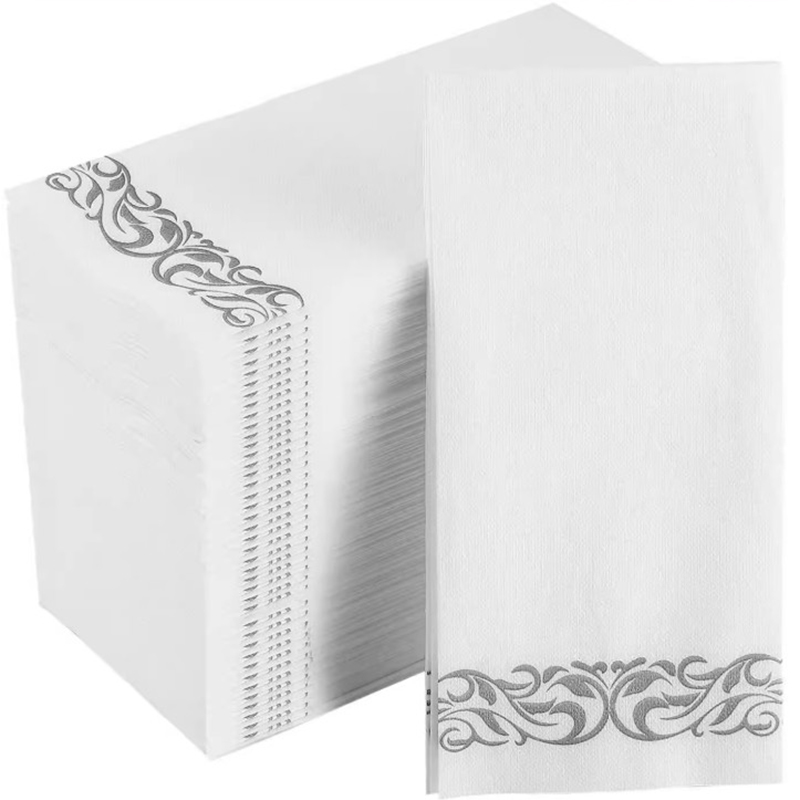
The material you select directly influences both staff efficiency and guest satisfaction. Not all paper products can handle the tension required for a tight, secure utensil roll.
Standard 1-ply and 2-ply napkins represent the most basic option. They offer the lowest cost per unit. These work well for high-volume quick-service restaurants (QSR) serving lightweight plastic or bamboo cutlery.
However, operators must watch out for inherent risks. Standard ply paper carries a high tear probability. When stretched over heavy stainless steel cutlery, thin paper easily rips. Staff often resort to double-wrapping the utensils to prevent tears. This habit instantly doubles your material usage. It completely negates the initial cost savings of buying cheaper supplies.
For mid-tier and upscale venues, airlaid dinner napkins provide a superior solution. Manufacturers create airlaid paper by using air rather than water to bond cellulose fibers. This unique process creates a fabric-like drape and remarkable tensile strength.
These products offer premium tactile feedback and excellent liquid absorption. Guests often mistake high-quality airlaid paper for real cloth. This material represents the best evaluation lens for casual dining and upscale-casual venues. You successfully replicate a linen experience without the laundering overhead.
Sustainability continues to drive purchasing decisions. Operators now frequently assess unbleached Kraft, bamboo-blend, and post-consumer recycled options.
When implementing eco-friendly napkins, you must test the structural integrity. Ensure the eco-friendly binder remains strong enough to handle tight wrapping. Some recycled papers feature shorter fibers. Shorter fibers can cause the napkin to snap under pressure. Always request samples to verify the material performs reliably during peak rush hours.
Use the chart below to compare common materials before making a purchasing decision.
| Material Type | Tensile Strength | Best For | Puncture Resistance |
|---|---|---|---|
| 1-Ply Standard | Low | QSR, Light Plastic Cutlery | Poor |
| 2-Ply Standard | Moderate | Casual Dining, Standard Flatware | Fair |
| Airlaid (Linen-Feel) | High | Upscale Casual, Heavy Cutlery | Excellent |
| Bamboo Blend | Moderate to High | Eco-Conscious Concepts | Good |
Sizing errors ruin tabletop presentations faster than almost any other operational mistake. Perfecting the utensil roll requires symmetrical starting points. The geometry of your napkin dictates the stability of the final bundle.
We strongly recommend using square paper napkins. These are usually 1/8 fold or 1/4 fold prior to opening. A square shape ensures consistent, even overlap as you tuck and roll the sides over the flatware.
Choosing the right dimensions prevents exposed utensil heads. It also keeps the roll from feeling bulky or clumsy.
Using rectangular dispenser napkins or undersized cocktail napkins invites disaster. The geometry simply does not support wrapping. Rectangular shapes leave utensil heads exposed to dust and sneezes. Furthermore, undersized napkins create unstable rolls. These loose bundles inevitably fall apart in the bus bin. Bussers then drop loose flatware onto the floor, slowing down table turns and creating safety hazards.
A common mistake involves judging size based on the folded dimension in the box. Always measure the fully unfolded sheet. The diagonal length from corner to corner dictates how well the napkin will encapsulate your silverware.
Once you select the right material and size, you must decide how to secure and present the bundle. The securing method affects staff prep time and guest perception.
Your tabletop serves as premium real estate for brand reinforcement. Custom printed napkins keep your logo front-and-center directly on the table setting. They elevate the perceived value of the dining experience.
While custom printing looks fantastic, you must navigate a few risks. Minimum order quantities (MOQs) are generally higher for custom runs. You must also ensure the manufacturer uses food-safe inks. The ink must remain bleed-resistant when wet. Guests will complain if a damp condensation ring from a water glass causes ink to stain their hands.
If you cannot meet the MOQs for full printing, consider alternative branding. You can use custom-printed adhesive paper bands. Wrap these branded bands around unprinted, premium airlaid napkins. This strategy serves as a highly cost-effective compromise. It delivers a branded touchpoint while keeping the napkin inventory generic and affordable.
Procuring paper goods requires a strategic approach to supply chain management. Sourcing the right product involves evaluating vendor capabilities, consistency, and compliance standards.
Restaurant operators typically choose between broadline food distributors (like Sysco or US Foods) and direct manufacturers. Broadline distributors offer the convenience of consolidating your deliveries onto one truck. However, their paper selections are often limited to generic house brands. You may struggle to find specific airlaid textures or exact 17"x17" dimensions.
Conversely, sourcing directly from a specialized paper napkin manufacturer offers distinct advantages. Manufacturers provide deeper customization, better batch consistency, and a wider variety of ply options. They understand the nuances of binder strength and fiber quality better than general food distributors.
Never order full pallets based solely on a website description. You must request physical samples first. Apply this shortlisting logic to every vendor:
Before finalizing a contract, assess the physical case sizes. Paper products are notoriously bulky. Calculate your storage footprint in dry rooms. Ensure you have adequate shelving to keep boxes off the floor.
Finally, verify compliance. Ensure all paper products meet FDA guidelines or your local food-contact safety standards. Unbleached or heavily dyed papers must utilize non-toxic processing methods to guarantee guest safety.
Choosing paper napkins for rolling silverware is an operational decision disguised as a tabletop design choice. The right product empowers your staff, protects your flatware, and signals quality to your guests. By moving away from fragile 1-ply options and embracing durable, square-cut materials, you eliminate daily frustrations.
We recommend you take immediate action to optimize this process. First, audit your current roll-up process and time your staff to establish a baseline. Next, request trial samples of airlaid or heavy-ply square napkins from a reputable manufacturer. Run a side-by-side time analysis in your dining room. Once you witness the reduction in tearing and re-rolling, you can confidently upgrade your inventory and streamline your table turns.
A: The most effective size ranges from 15"x15" to 17"x17" in unfolded square dimensions. A 15-inch square provides the minimum diagonal length needed to securely encapsulate standard forks and knives. For larger flatware, such as heavy steak knives or three-piece sets, use a 17-inch square to ensure full coverage without exposed utensil heads.
A: We strongly advise against it. Standard 1-ply napkins carry a high risk of tearing when pulled tightly over metal cutlery. Staff often have to double-wrap the utensils to prevent ripping, which wastes time and doubles material usage. Use 2-ply, 3-ply, or airlaid options for operational efficiency.
A: Yes, generally speaking, they are. Airlaid manufacturing uses air to bond cellulose fluff pulp. Because the core material is natural wood fiber, it biodegrades. However, compostability timelines vary depending on the specific synthetic binders or latex used by the manufacturer to provide tensile strength.
A: The industry standard involves using self-adhesive paper bands. These wrap around the center of the bundle and stick to themselves securely. Alternative solutions include reusable or disposable napkin rings. You can also train staff in self-locking fold techniques, though this takes more time to master.