
Views: 0 Author: Site Editor Publish Time: 2026-11-26 Origin: Site


The global demand for wet wipes is skyrocketing today. This surge creates a highly profitable arena for ambitious brands. However, navigating the complex world of contract manufacturing often leaves even seasoned product managers feeling overwhelmed. You might find yourself staring at a spreadsheet filled with identical factory quotes, completely unsure which supplier will actually deliver on their promises. Making a poor choice in this critical phase leads to disastrous product recalls. It severely damages brand reputation and causes devastating revenue losses.
To succeed on the production floor and in the retail market, you need a systematic approach to supplier vetting. In this comprehensive engineering and product guide, you will learn exactly how to evaluate OEM wet wipes across the three most critical pillars: fabric, lotion, and packaging. Whether you are developing heavy-duty industrial degreasers, ultra-gentle facial tissues, or specialized hygiene products, we cover the exact criteria required to make informed, profitable decisions. This ensures your final product meets the highest industry standards.
Fabric is the Foundation: The choice of non-woven material directly dictates the durability, softness, and overall cost of your product.
Lotion Formulation Determines Purpose: The liquid solution must be carefully balanced with highly purified water, safe preservatives, and targeted active ingredients.
Packaging Protects Your Investment: Selecting the appropriate moisture barrier ensures liquid retention, prevents contamination, and extends product shelf life.
Compliance is Non-Negotiable: A reliable manufacturing partner must possess strict quality control certifications while operating in standardized cleanroom environments.
Total Cost of Ownership: Evaluating a manufacturer goes far beyond the initial unit price. You must carefully consider minimum order quantities, R&D capabilities, and production lead times.
The global wet wipes industry has evolved into a highly segmented and specialized market. For businesses looking to enter or expand within this space, grasping the distinct manufacturing models is the first critical step toward profitability. An Original Equipment Manufacturer - OEM - arrangement is perfectly suited for brands that already possess a specific product vision, formulation guidelines, and packaging designs. The brand retains complete control over its intellectual property. Conversely, an Original Design Manufacturer - ODM - provides pre-existing formulas that a brand can simply label as its own. For companies aiming to build a unique market presence, OEM production offers the necessary customization to truly stand out.
Recent industry trend analyses reveal a fascinating shift in consumer expectations and regulatory landscapes. Post-pandemic panic buying has stabilized. The market is no longer solely focused on generic sanitizing products. Instead, there is a surging demand for premium, niche-specific applications. Consumers actively seek out biodegradable cosmetic removers and pet-safe grooming wipes. Market analysts note a strict regulatory push toward sustainable raw materials and transparent ingredient lists. Brands that fail to adapt to these eco-conscious trends face shrinking market share.
Consequently, the rise of Private Label Wet Wipes has fundamentally shifted retail dynamics. Independent brands, big-box retailers, and boutique cosmetic companies are increasingly pivoting to private labeling. This strategy secures higher profit margins and maintains strict brand control. By cutting out the middleman and working directly with a capable factory, companies can offer premium quality products at highly competitive price points.
The physical wipe itself serves as the primary touchpoint for the consumer. This makes your fabric selection a paramount engineering decision. While non-woven fabric remains the industry standard, its underlying specifications vary drastically from one supplier to the next.
The standard measurement for the weight and thickness of these fabrics is Grams per Square Meter - GSM. This metric directly impacts the tactile feel, absorption capacity, and mechanical durability of the wipe. A 35 to 40 GSM fabric is typically relegated to economy brands. It feels thin and is prone to tearing under heavy use. Stepping up to a 45 to 50 GSM fabric provides the industry standard for everyday cleaning. Meanwhile, 60 GSM and above is strictly reserved for premium applications, delivering superior thickness and luxurious liquid retention.
To make the selection process actionable, here is a core comparison of standard materials we evaluate on the production line:
Fabric Type | Ideal GSM Range | Key Engineering Characteristics | Best Commercial Application |
|---|---|---|---|
Spunlace Non-woven | 45 - 60 | High tensile strength, incredibly soft texture, cost-effective. | Facial wipes, everyday baby care, general surface cleaning. |
100% Bamboo Fiber | 50 - 65 | Fully biodegradable, naturally antibacterial, highly absorbent. | Eco-friendly product lines, premium skincare. |
Flushable Wood Pulp | 50 - 60 | Disperses rapidly in municipal water systems, EDANA compliant. | Toilet wipes, adult incontinence care. |
Beyond weight and material, structural integrity matters. When assessing spunlace, always inquire whether the fabric is cross-lapped or parallel-lapped. Picture a consumer hastily pulling a wipe from a tight dispenser. Cross-lapped spunlace offers bi-directional strength, preventing that frustrating stretch-and-tear experience. Finally, consider the surface texture. Plain textures are smooth and gentle for sensitive skin. Pearl embossed or 3D mesh textures create micro-abrasions that help trap dirt, makeup, or industrial grime instantly.
While the non-woven fabric acts as the delivery mechanism, the liquid lotion performs the actual heavy lifting. A rigorous, uncompromising evaluation of the factory's chemical formulation capabilities is absolutely crucial.
Water typically constitutes up to 98 percent of a wet wipe formulation. Therefore, water quality is unequivocally king. A reputable manufacturer utilizes advanced purification systems. Electrodeionization - EDI - represents the gold standard on modern production lines. EDI purification removes ionized species and impurities to a near-absolute degree. This drastically reduces the risk of microbial contamination and ensures the long-term stability of your active ingredients.
Different target markets require highly specialized chemical formulations. When engineering Baby Wet Wipes, the formulation must undergo rigorous dermatological testing. Standard specifications demand an alcohol-free and paraben-free solution. The pH level must be meticulously balanced close to 5.5 to match the natural acidity of an infant's skin. We frequently incorporate soothing additives like pure Aloe Vera extract and Chamomile. Conversely, antibacterial wipes demand active biocidal ingredients like Benzalkonium Chloride. The manufacturer must prove their technical ability to blend these harsh agents safely without degrading the fabric over time.
Wet wipes create a perpetually moist environment. They are highly susceptible to bacterial and fungal growth. Modern formulations are rapidly moving away from harsh preservatives like formaldehyde-releasers. You must verify that the OEM utilizes broad-spectrum, skin-friendly preservative systems. Phenoxyethanol or Potassium Sorbate maintain product integrity without triggering dermal irritation.
Packaging serves a vital dual purpose. It acts as the primary moisture barrier to prevent your product from drying out, and it functions as the visual billboard for your brand on crowded retail shelves. The barrier properties of the packaging film directly dictate the product shelf life, which typically ranges from 24 to 36 months.
Standard packaging utilizes multi-layered laminated films like PET and PE. However, incorporating an aluminum foil layer significantly lowers the Moisture Vapor Transmission Rate. This is an essential engineering upgrade for alcohol-based wipes or products destined for hot, arid climates. Flow packs are the most ubiquitous format. Here, the closure mechanism is a critical evaluation point. A standard resealable sticker label is highly cost-effective but often loses adhesion after repeated use. Upgrading to a rigid plastic flip-top lid ensures a hermetic seal after every single use.
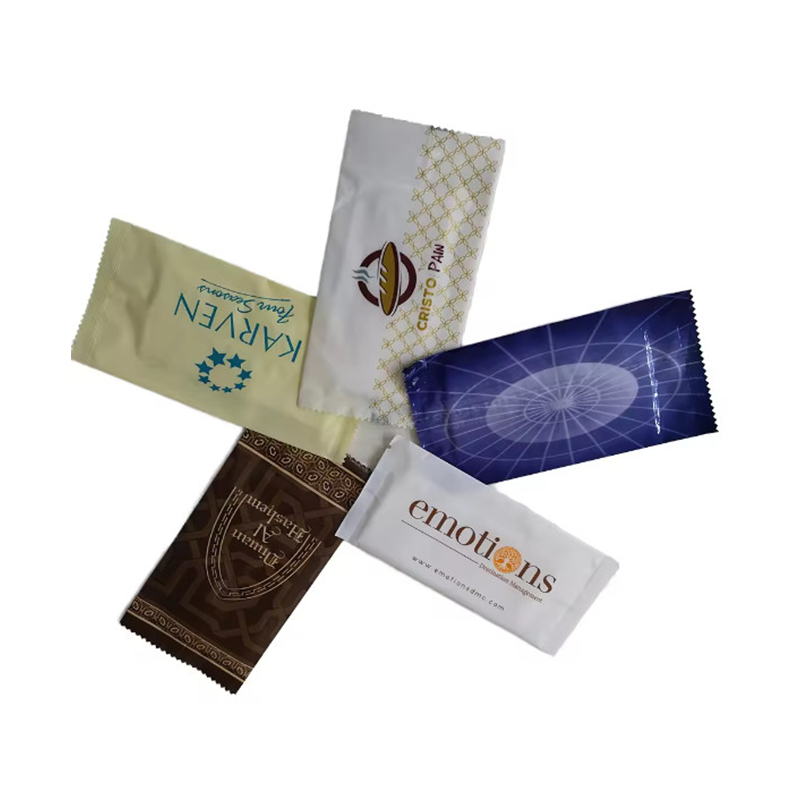
For premium hospitality, aviation, and high-end restaurant sectors, Custom Single-Packed Wet Wipes are highly lucrative. Imagine a luxury airline offering a flimsy, poorly sealed wipe. It instantly degrades the customer experience. Evaluating an OEM for this format requires verifying they possess dedicated single-sachet machinery. Standard specifications for these premium wipes often feature a 15x20cm fabric size. The equipment must execute precise liquid dosing and high-integrity four-side sealing to completely eliminate evaporation.
The regulatory landscape governing wet wipes is incredibly stringent. A manufacturer's internal quality control infrastructure acts as the ultimate safeguard for your brand reputation and financial security. Facility hygiene must be your primary focus during the vetting process.
Wet wipes must be manufactured in a highly controlled environment to prevent airborne contamination. Industry best practices dictate that the OEM operates within a Class 100,000 purified cleanroom. This rigorous classification actively filters the air using HEPA systems to limit particulate matter and microorganisms. It ensures the fabric, purified water, and packaging remain uncontaminated throughout the high-speed folding and sealing processes.
Certifications serve as objective, third-party verification of a factory's competence. Demand to see their updated certificates before signing any contract. ISO 9001 demonstrates a standardized Quality Management System. GMPC outlines Good Manufacturing Practices specifically for cosmetics. If you intend to sell sanitizing wipes in the US market, FDA or EPA registration is an absolute legal requirement. An advanced facility will possess robust in-house testing capabilities. They routinely conduct microbial limit testing, precise pH balancing, and vacuum leak testing on final packaging before any shipping container is loaded.
Selecting the correct manufacturing partner is a complex, strategic business decision. It extends far beyond simply comparing unit prices. Your chosen OEM acts as the literal backbone of your supply chain. Their technical limitations will inevitably become your brand limitations. Use this actionable standard to evaluate potential partners:
First, thoroughly assess their R&D capabilities. A superior manufacturer does more than assemble raw materials. They engineer technical solutions. Can their chemical engineering team reverse-engineer a competitor's successful product? Can they provide iterative samples until your exact specifications are achieved?
Next, navigate Minimum Order Quantities. MOQs directly impact your initial capital investment. They are dictated by the physical constraints of manufacturing machinery. Standard 80-count flow packs might require a manageable 10,000 units. Custom single sachets frequently demand runs exceeding 100,000 units due to the high-speed nature of the equipment and custom-printed foil films.
Finally, evaluate the factory production capacity and historical lead times. If a facility is already operating at maximum capacity, they will inevitably struggle to accommodate your peak seasonal demands. Prioritize partners who exhibit flawless communication and pricing transparency. Vague, lump-sum quotes are a massive red flag. A trustworthy OEM clearly delineates the specific costs of fabric, chemical lotion, packaging materials, and freight.
To build a sustainable and highly profitable business model, you must thoroughly understand the underlying variables that dictate your unit cost. Pricing in this industry is a delicate balancing act between your product specifications and the logistical realities of mass production.
The final price per unit is driven primarily by your core materials. The non-woven fabric usually represents the largest cost driver. Increasing the GSM from a standard 45 to a heavy-duty 60 significantly inflates the price. Transitioning from standard polyester blends to 100 percent biodegradable bamboo incurs a premium. Lotion complexity also plays a major role. A basic water-and-preservative mix is highly economical. Introducing patented skincare actives or pharmaceutical-grade biocides elevates the cost per wipe. Packaging upgrades, such as adding a rigid plastic flip-top lid or utilizing thicker aluminum-lined films, add incremental expenses to every single unit.
Beyond the obvious material costs, brands must vigilantly account for hidden auxiliary expenses. These frequently include tooling fees for custom plastic lid molds. You will also encounter expensive cylinder plate charges for each color used in the rotogravure printing process. Factoring in these costs upfront during the planning stage prevents disastrous budget overruns during your crucial launch phase.
Launching a successful line of private label wet wipes requires meticulous planning and a strict refusal to compromise on fundamental quality. By systematically evaluating the three core components—the fabric weight and composition, the lotion safety and efficacy, and the packaging barrier properties—you establish a robust foundation for your brand success.
Remember that the right OEM wet wipes manufacturer is much more than a mere production facility. They are a strategic partner deeply invested in your brand growth trajectory. Take the necessary time to request multiple product samples. Rigorously verify all factory certifications. Ask the hard, uncomfortable questions regarding their internal quality control protocols.
Ready to elevate your brand with premium, compliant manufacturing? Visit ulivepaper.com to explore an extensive range of customizable wet wipe solutions. Partner with a factory that delivers precise formulations, reliable cleanroom production, and packaging that stands out on the retail shelf. Start building a profitable, resilient wet wipes business that consumers can genuinely trust today.
Minimum order quantities are not standardized across the industry. They vary significantly depending on the manufacturer machinery, the type of packaging, and raw material constraints. Generally, standard 80-count flow packs require an MOQ ranging from 10,000 to 30,000 units per production run. Conversely, individually wrapped single sachets often have much higher MOQs, frequently starting at 100,000 units due to the rapid speed of the packaging machinery.
Yes, comprehensive customization is a standard offering from highly capable contract manufacturers. A reputable factory features an in-house R&D laboratory equipped to fully tailor your formulation. You can engineer a product that is entirely fragrance-free, hypoallergenic, and formulated without harsh chemicals like parabens or alcohol. You can also incorporate soothing, plant-based ingredients such as calendula or chamomile extract.
While frequently used interchangeably in casual conversation, these terms refer to distinct parts of the supply chain. OEM refers to the physical factory and the business entity that actually produces the goods based on your specific technical requirements. Private label wet wipes refer to the final consumer products that are manufactured by that OEM partner but are packaged, marketed, and sold exclusively under your own proprietary brand name.
Yes, when calculated on a strict per-wipe basis, individually packed wipes are generally more expensive to manufacture than traditional multi-packs. This price difference is driven by increased material usage, as single sachets require significantly more specialized foil or composite film per individual wipe. However, despite the higher manufacturing cost, these wipes command a significantly higher retail price margin.
The timeline for manufacturing depends heavily on whether it is a completely new project or a repeat order. For a brand-new product launch, the entire process usually takes between 4 to 8 weeks. This comprehensive timeline accounts for initial formulation development, specific fabric sourcing, packaging design approval, and final mass production. Repeat orders typically benefit from a much shorter lead time of approximately 2 to 4 weeks.
High-quality OEM wet wipes must adhere to strict international standards. The manufacturing facility should operate a Class 100,000 cleanroom to prevent contamination. Key certifications include ISO 9001 for quality management and GMPC for cosmetic good manufacturing practices. Products must also pass rigorous microbial limit testing, pH balancing, and dermal irritation tests before market release.
You should always request the official certificate documents directly from the manufacturer. Check the expiration dates and the scope of the certification. You can verify the authenticity of ISO or GMPC certificates by contacting the issuing third-party auditing body or checking their online verification databases. A transparent manufacturer will gladly provide verifiable registration numbers.