
Views: 160 Author: Site Editor Publish Time: 2026-08-27 Origin: Site


While often viewed as a commoditized operational expense, the structural engineering of a paper towel—specifically its embossing pattern—fundamentally dictates its functional efficiency and cost-in-use. Procurement teams and facility managers frequently base purchasing decisions solely on ply count, sheet dimensions, or price per roll. This overlooks how specific micro-grooves and structural patterns impact liquid retention, surface contact area, and wet strength. Ignoring these factors often leads to increased consumption, higher waste, and elevated annual spend.
Understanding the physics of embossing and tissue-converting technology allows buyers to objectively evaluate performance metrics. By analyzing these structural details, facilities can balance the trade-offs between absorption speed and tensile strength. This technical approach ensures you select the optimal specifications for your facility's unique demands, moving beyond basic metrics to evaluate true wiping performance.
Embossing is Structural, Not Aesthetic: Textured patterns create micro-grooves that increase surface area, directly enhancing capillary action, wicking speed, and moisture retention.
Pattern Dictates Application: Honeycomb and quilted designs prioritize rapid liquid absorption, while micro-embossed surfaces optimize friction and surface contact area for scrubbing and debris removal.
The Strength-Absorbency Trade-off: Deep embossing increases liquid capacity but can compromise structural integrity if the ply bonding process is subpar; evaluating wet strength is critical for heavy-duty applications.
Strategic Procurement Lowers Annual Spend: Partnering with a qualified paper towel manufacturer to match the exact embossing specification to the primary use case (e.g., kitchen vs. restroom) reduces overall sheet consumption and lowers annual operational expenses.
Mechanical embossing transforms a flat cellulose sheet into a three-dimensional structure. Steel rollers press specific patterns into the paper web during the converting process. This action creates micro-grooves across the sheet surface. These grooves act as tiny reservoirs to trap and store moisture. The increased surface area accelerates absorption rates and reduces absorption time compared to unembossed alternatives. Capillary action draws liquid into these pockets, preventing fluid from simply pooling on the surface. When you deal with high-viscosity fluids in a commercial setting, this capillary action is what prevents a massive spill from spreading further across the floor or workbench.
Raised textures significantly increase the coefficient of friction against surfaces. When wiping a counter or machinery, embossing maximizes the effective surface contact area. This creates mechanical adhesion necessary to trap particulate matter, grease, and viscous liquids during wiping motions. A flat sheet pushes debris around; an embossed sheet lifts and holds it within the textured valleys. Think of it like the tread on a tire. Without the grooves, the tire hydroplanes. Without embossing, the paper simply glides over the spill without picking up the underlying dirt or grease.
Beyond absorption and friction, embossing rollers physically interlock multiple plies without relying solely on chemical adhesives. The pressure points fuse the layers together. However, this process requires precise calibration. Poorly calibrated embossing pressure, incorrect moisture levels, or misaligned patterns during the tissue converting process create a high risk of delamination. Plies separating during use frustrate users and double the required sheet count for a single task. In a fast-paced kitchen environment, a delaminated sheet means the user immediately grabs another handful, instantly doubling your consumption metrics.
To fully grasp the mechanical advantage, consider the actual volume of liquid a single square inch of embossed paper can hold compared to a flat sheet. The three-dimensional peaks and valleys create a void volume that fills with liquid before the actual cellulose fibers become fully saturated. This void volume is the secret to high-performance wiping. It allows the user to pick up a spill quickly and then use the remaining dry fibers to buff the surface dry, all with a single pull from the dispenser.
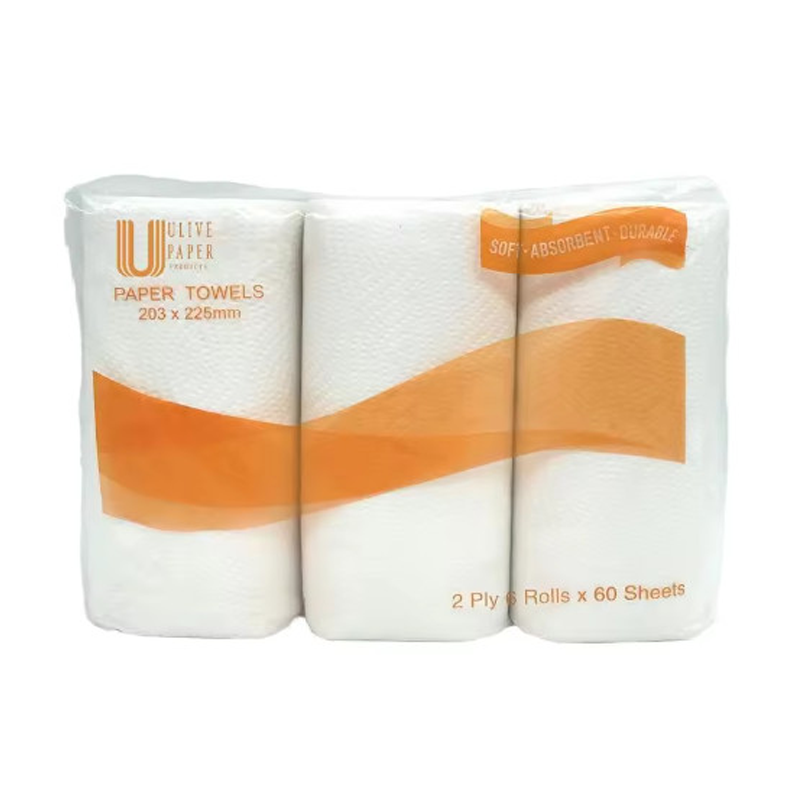
Different environments require specialized textures to handle distinct cleaning challenges. Selecting the right pattern prevents excessive waste and improves cleaning efficiency. You cannot use the same product for wiping down a greasy engine block that you use for cleaning a delicate glass mirror. The physical requirements of the task dictate the structural requirements of the paper.
Closed-cell patterns like honeycomb or quilted designs offer a distinct geometric advantage. They maximize liquid holding capacity and speed up fluid entrapment. The deep pockets function like individual sponges. These patterns excel in heavy-duty spill response scenarios. Automotive shops, food preparation areas, and industrial environments benefit most from the rapid absorption capabilities of deep-embossed sheets. When a gallon of cutting fluid hits the shop floor, you need a product that acts as a dam and a sponge simultaneously. Honeycomb patterns provide that exact mechanical response.
Micro-embossing utilizes high-density, shallow-depth patterns designed for uniform surface contact. Instead of deep liquid reservoirs, these patterns prioritize a smooth, consistent wiping action. They are ideal for janitorial tasks requiring streak-free finishes on glass or polished metal. Healthcare surface sanitization and delicate component wiping also rely on micro-embossed sheets because the tighter fiber compression reduces fiber shedding. If you are cleaning a surgical stainless steel table, leaving behind cellulose dust is unacceptable. Micro-embossing compresses the fibers tightly enough to prevent this linting while still providing enough texture to remove surface contaminants.
Full-sheet texturing provides maximum absorbency and wicking speed across the entire surface. Conversely, edge-only embossing leaves the center of the sheet flat. Edge embossing prioritizes center-sheet softness, hand-feel, and tensile strength, often preferred in upscale restroom environments. Success depends on matching the pattern depth and density to the viscosity of the primary liquids being cleaned. A thick oil requires a macro-embossed sheet to trap the heavy liquid, while water is easily handled by a standard edge-embossed product.
Embossing Type | Primary Benefit | Ideal Application | Structural Characteristic |
|---|---|---|---|
Honeycomb / Quilted | Maximum liquid retention | Industrial spills, kitchens | Deep, closed-cell pockets |
Micro-Embossed | Streak-free cleaning, low lint | Glass, healthcare surfaces | Shallow, high-density texture |
Edge-Embossed | Softness and high tensile strength | Restroom hand drying | Smooth center, bonded edges |
Macro-Embossed | Heavy debris removal | Manufacturing, automotive | Large, aggressive ridges |
An inverse relationship exists between extreme absorbency and tensile strength. High absorbency requires loose fiber networks and deep embossing to create large liquid pockets. High tensile strength requires dense, tightly compressed fiber bonding. Evaluating how well commercial paper towels maintain their structural matrix when fully saturated is critical for heavy-duty tasks. If the sheet falls apart the moment it gets wet, the user will simply grab five more sheets to compensate.
Overly aggressive embossing rollers can fracture cellulose fibers. This fracturing leads to excessive linting and premature tearing under stress. Facilities must assess the balance of mechanical texturing and wet-strength resin additives. Proper resin integration prevents the sheet from disintegrating and leaving residue behind during aggressive scrubbing. When you apply heavy downward pressure to scrub dried food off a prep table, the paper must hold together. The wet-strength resins act as a cross-linking agent, keeping the cellulose fibers bound even when soaked in water or cleaning chemicals.
To properly evaluate this trade-off in your facility, you need to conduct physical tests. Do not rely solely on the manufacturer's specification sheet. Take the product, soak it completely in water, and then attempt to pull it apart. Note how much force is required to break the sheet. Then, take a dry sheet and rub it aggressively against a dark surface to check for linting. These practical tests will tell you more about the product's actual performance than any marketing brochure.
Submerge the sheet completely in a bucket of water for ten seconds.
Remove the sheet and hold it by two corners to see if it tears under its own water weight.
Wring the sheet out completely and attempt to unfold it without tearing.
Use the damp sheet to scrub a textured surface and observe the amount of fiber left behind.
Vetting a paper towel manufacturer requires analyzing their converting equipment standards. Investigate their roller engineering—whether they use steel-to-steel, steel-to-rubber, or steel-to-paper embossing. Consistency in ply bonding indicates a controlled manufacturing environment. Red flags include inconsistent pattern depth across the roll width, frequent ply separation, or excessive paper dust in bulk packaging. If you open a case and see a cloud of dust, the embossing rollers are likely fracturing the paper during production.
When placing kitchen paper towel wholesale orders, define strict requirements for food-service environments. Demand FDA-compliant materials, high grease-absorption patterns, and rapid wicking speeds. Scalability considerations must balance pallet density, roll yardage, and core sizes for high-turnover commercial kitchens. You need to ensure that the physical dimensions of the rolls match your existing dispenser infrastructure. A roll that is half an inch too wide will jam the dispenser, leading to frustrated staff and damaged equipment.
Procuring custom paper towel rolls offers opportunities for corporate differentiation. You can evaluate the ROI of proprietary embossing patterns, customized sheet dimensions, or branded logos. However, be aware of implementation risks. These include minimum order quantities (MOQs), specialized engraving roller tooling investments, extended lead times, and compatibility with existing proprietary dispensing systems. Custom tooling for embossing rollers is a significant capital expense. You must ensure that the volume of your order justifies this upfront cost.
Furthermore, consider the logistics of supply chain stability. A manufacturer might produce a fantastic embossed sheet, but if they cannot deliver it consistently on time, your facility will suffer. Evaluate their production capacity, their raw material sourcing, and their geographic proximity to your distribution centers. A reliable supply of a well-engineered product is far more valuable than a sporadic supply of a slightly cheaper alternative.
A poorly embossed, low-cost roll frequently leads to users pulling three to four sheets per spill. A highly engineered, embossed sheet requires only one. Calculating the hidden costs of labor for frequent dispenser refills and waste management reveals why cheaper rolls often cost more annually. When a janitor has to stop what they are doing to refill a dispenser twice a day instead of once, you are paying for that lost time. Multiply that across a large facility, and the labor costs quickly dwarf the savings from buying cheap paper.
The interaction between towel texture, perforation tensile strength, and automated dispensing mechanisms dictates waste levels. Deeply embossed towels may catch or tear prematurely inside certain housings. Conducting a pilot test ensures the selected embossed towel dispenses cleanly without jamming the mechanism. If the perforation is too strong, the user will pull hard and rip the sheet in half. If it is too weak, the sheet will tear before it fully exits the dispenser. The embossing pattern directly affects this tensile strength, making compatibility testing an absolute necessity.
Waste reduction also extends to the packaging and core materials. High-capacity rolls with minimal core diameter reduce the amount of cardboard waste generated by your facility. When evaluating a new embossed product, look at the entire lifecycle of the roll, from the pallet wrapping to the final disposal of the core. Every element impacts your operational efficiency and waste management overhead.
Request specification sheets detailing ply-bonding methods, embossing depth, and roll-to-roll consistency from shortlisted vendors.
Conduct a controlled, side-by-side saturation and wet-scrub test in the actual facility environment before committing to a wholesale contract.
Audit existing dispenser mechanisms to verify compatibility with new embossing patterns and perforation strengths.
Establish a clear baseline of current sheet consumption per task to accurately measure the efficiency gains of upgraded textures.
A: Embossing increases the surface area and bulk of the paper. It creates micro-grooves that enhance capillary action for faster liquid absorption. The texture also provides a higher coefficient of friction for better scrubbing power and dirt entrapment.
A: Yes. While embossing improves absorbency and bonds multiple plies together, overly deep or aggressive patterns can fracture the paper fibers. This potentially reduces the towel's tensile strength and causes linting when wet.
A: Quilted or honeycomb patterns feature larger, deeper pockets designed to trap and hold high volumes of liquid rapidly. Micro-embossed patterns have smaller, high-density textures that provide a smoother, more uniform surface contact area, ideal for streak-free cleaning.
A: Look for options that feature deep, closed-cell embossing for maximum grease and liquid absorption. Combine this with high wet-strength ratings to prevent shredding during heavy-duty wiping tasks.
A: Yes, many manufacturers offer custom rolls with proprietary embossing patterns or branded logos. This process requires specialized engraving roller tooling and typically carries higher minimum order quantities and extended lead times.