
Views: 122 Author: Site Editor Publish Time: 2026-09-11 Origin: Site


Arbitrary sizing, misleading sheet counts, and varying density metrics make bulk Paper towel procurement a complex logistical challenge rather than a simple commodity purchase. Facility managers often face confusing marketing terms that obscure the actual volume of paper they receive. Miscalculating roll size, sheet density, and dispenser compatibility leads to frequent restocking labor, accelerated product waste, and inflated operational budgets for high-volume facilities. You might think you are getting a great deal on a pallet of jumbo rolls, only to find your maintenance staff replacing them twice as often. Establish a data-backed procurement framework to evaluate true cost-per-use, analyze facility-specific sizing requirements, and navigate wholesale supply chains effectively. By understanding the physical properties of the paper and how it interacts with your existing hardware, you can drastically reduce waste and streamline your facility operations.
Density Outperforms Dimensions: A smaller sheet with high absorbency yields a lower cost-per-use than a larger, low-density sheet that requires multiple pulls.
Dispenser Compatibility Dictates ROI: Purchasing bulk rolls without auditing existing facility dispensers introduces high retrofitting costs and increases product waste.
True Cost is Calculated per Sheet, Not per Roll: Evaluating bulk orders requires standardizing metrics to cost-per-square-foot or cost-per-sheet to bypass arbitrary manufacturer packaging sizes.
Format Matches Function: "Choose-a-size" formats reduce waste in controlled environments, while continuous hardwound rolls are mandatory for high-traffic commercial restrooms.
Retail brands crossing over into commercial spaces often use deceptive marketing terminology like "jumbo" or "mega" rolls. These terms lack standardized definitions across the industry. A "mega" roll from one brand might contain less actual paper than a standard roll from a dedicated commercial supplier. You must look past the packaging and focus entirely on linear footage and sheet count to understand what you are actually buying.
Standard commercial roll lengths typically measure 350 feet, 800 feet, or 1,000 feet. These lengths directly translate to maintenance intervals for your janitorial staff. A 1,000-foot roll requires far less frequent replacement than a 350-foot roll, saving substantial labor hours in high-traffic restrooms. When comparing consumer crossover sizes—such as large-format 160-sheet rolls or standard 4.5-inch by 4-inch sheets—against continuous commercial rolls, the continuous format almost always wins in high-volume settings due to the sheer volume of material packed onto a single core.
The mathematical relationship between core size, roll diameter, and linear footage dictates the physical footprint of the product. A roll with a large cardboard core might look thick on the shelf but contains significantly less paper. Conversely, coreless rolls maximize the linear footage within the same outer diameter. Always check the linear footage specification rather than relying on the visual size of the roll when evaluating a pallet.
Roll Type | Typical Length | Core Size | Best Application |
|---|---|---|---|
Standard Perforated | 50 - 100 feet | 1.5 - 2 inches | Small offices, breakrooms |
Hardwound Continuous | 350 - 800 feet | 1.5 - 2 inches | Medium traffic restrooms |
High-Capacity Hardwound | 1,000+ feet | 2 inches or Coreless | Stadiums, airports, industrial |
Comparing 1-ply versus 2-ply configurations requires understanding your facility's specific daily demands. A 2-ply sheet feels softer and generally absorbs more liquid per square inch because of the air trapped between the layers. However, a high-quality 1-ply sheet manufactured with advanced techniques can sometimes outperform a cheap 2-ply alternative. The real performance indicator lies in the material density.
Material density is measured in grams per square meter (GSM). Higher GSM indicates a thicker, denser sheet that can withstand aggressive wiping. Embossing patterns also play a major role by creating small pockets that trap and hold water. High-GSM paper with deep embossing patterns offers superior water retention. This directly impacts the performance ratio on the floor.
Six inches of high-GSM, premium textured paper absorbs more fluid than twelve inches of low-density value paper. When users grab low-density paper, they instinctively pull three or four sheets to dry their hands or clean a spill. This negates any upfront cost savings you achieved by purchasing the cheaper, thinner paper. Investing in higher density reduces the total volume consumed by the end user.
Weigh a dry sheet of paper to determine its baseline mass.
Submerge the sheet in water for exactly ten seconds.
Suspend the sheet and let the excess water drip off for thirty seconds.
Weigh the wet sheet to calculate the total volume of water retained.
Perforated "choose-a-size" formats typically measure 5.5 to 6 inches wide, compared to standard 11-inch sheets. Manufacturers claim these smaller perforations reduce waste by allowing users to take only what they need. In controlled environments with conscientious users, this claim holds true and can stretch a roll further.
Benchmarking the efficiency of choose-a-size formats reveals they minimize volumetric waste for minor tasks. A small coffee spill in an office breakroom does not require a massive 11-inch sheet. The fractional format makes it highly efficient for light-duty cleaning where a full sheet would end up mostly dry in the trash.
However, you must identify where these smaller perforations succeed and where they fail. They are excellent for breakrooms and small administrative offices. They fail miserably in industrial spill scenarios or high-traffic restrooms. In a busy restroom, users will simply grab multiple small sheets, entirely defeating the purpose of the perforation and increasing overall consumption.
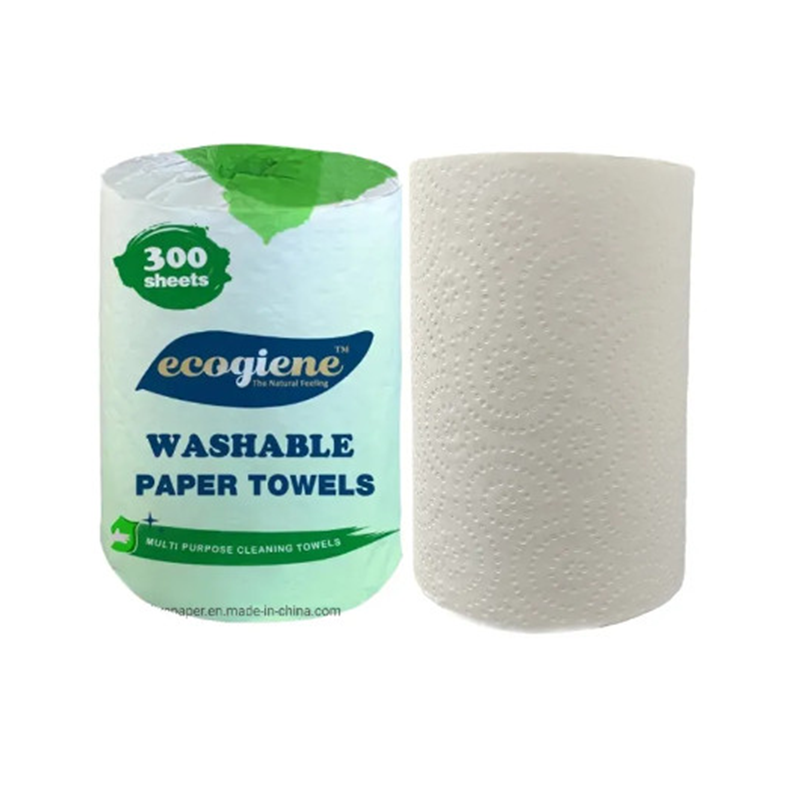
Continuous hardwound commercial paper towels are an operational necessity for high-volume restrooms. These facilities experience constant foot traffic from hundreds of users daily. Using perforated rolls here guarantees empty dispensers and frustrated patrons. Hardwound rolls maximize paper volume within the dispenser housing, significantly minimizing restocking labor for your janitorial team.
You must evaluate the trade-offs between 8-inch and 10-inch roll widths. An 8-inch width is standard and fits most universal manual dispensers mounted on restroom walls. A 10-inch width provides more drying surface area per pull, which can reduce the number of pulls a user makes. Automated dispensers often handle both, but you must verify compatibility before ordering a pallet of wider rolls that might jam the internal feed mechanism.
Sourcing kitchen paper towel wholesale requires strict adherence to industry standards and health codes. Food service environments demand food-safe certifications and high wet-strength. The paper must not disintegrate when scrubbing a sanitized prep table or wiping down a commercial flat top. It must hold together under vigorous use and exposure to harsh cleaning chemicals.
Larger sheet sizes offer better efficiency for heavy kitchen spills. A massive grease spill requires substantial surface area to contain and remove quickly during a dinner rush. Conversely, smaller sheets work well for standard sanitizing routines, like wiping down a clean counter. Center-pull roll sizes are highly effective in commercial kitchens. The enclosed dispenser protects the roll from airborne grease, and the one-handed dispensing mechanism prevents cross-contamination during busy service hours.
Shop towels and heavy-duty wiping rolls have strict sizing and durability requirements. These environments deal with solvents, heavy oils, and rough surfaces like diamond plate steel or concrete. Standard paper products will shred instantly upon contact. You need oversized, solvent-resistant rolls designed specifically for industrial applications.
Analyzing the cost-benefit of bulk purchasing these specialized rolls shows clear advantages for maintenance crews. While the unit cost is higher, the durability means a mechanic might use one heavy-duty wiper instead of ten standard sheets to clean an engine block. This specialized sizing ensures the product matches the severity of the task, keeping workers efficient.
To evaluate true value, you must use a standard procurement formula: divide the total roll cost by the total square footage. This gives you the true unit cost per square foot. Relying on the cost per roll is a flawed strategy because roll sizes vary wildly between manufacturers and product lines.
You need a mathematical method for normalizing sheet sizes. Multiply the cost-per-sheet by the surface area of that sheet. This allows you to compare irregular sizes directly with standard commercial sheets. A small sheet might look cheaper until you calculate its cost per square inch and realize you are paying a premium for less material.
Always factor in the "usage multiplier." This is the number of sheets an average user pulls based on towel quality and absorbency. If a cheap towel requires three pulls to dry hands, you must multiply its unit cost by three to find the true cost-per-use. High-quality paper often has a lower true cost-per-use despite a higher initial purchase price.
Warehousing bulk paper products carries hidden costs that impact your bottom line. You must account for pallet dimensions and the floor space they consume in your facility. Paper is bulky and lightweight. Storing ten pallets of paper towels takes up valuable real estate that could be used for higher-margin inventory or equipment.
Climate control is another critical factor for long-term storage. Paper degrades when exposed to moisture or extreme humidity. If your warehouse is damp, the paper will absorb ambient moisture, ruining its structural integrity before it ever reaches a dispenser. Coreless rolls offer superior spatial efficiency in bulk storage. By eliminating the cardboard core, manufacturers pack more paper into a smaller footprint, reducing your storage overhead.
Consumer-grade pricing models are intentionally confusing. Claims like "1 bulk roll equals 3 regular rolls" mean nothing to a facility manager trying to supply a hospital. You must deconstruct these claims and convert them to linear footage or square footage to make informed decisions.
Sourcing warehouse club bulk packs might seem convenient for small operations. These packs often feature premium 160-sheet rolls. However, negotiating directly with a paper towel manufacturer yields better long-term results for larger facilities. You gain access to commercial-grade products, consistent supply chains, and dedicated account management.
Establish volume thresholds to determine when to switch procurement methods. Transitioning from case-level ordering to pallet-level ordering yields positive ROI once your monthly consumption exceeds a specific square footage. Direct manufacturer relationships eliminate the retail markup and streamline your logistics.
Many suppliers use a "razor and blades" business model to secure long-term contracts. They provide proprietary dispensers at a low cost or even for free. However, these dispensers lock you into buying their specific roll sizes. If they raise their paper prices, you have no alternative without replacing all your hardware across the entire building.
Installing universal dispensers offers long-term flexibility and protects your budget. Universal units accept multiple roll diameters and core sizes. This allows you to shop around and source paper from different manufacturers based on availability and performance. The initial investment in universal hardware pays off quickly through competitive paper sourcing.
Changing bulk roll suppliers often requires swapping dispensers if you are locked into a proprietary system. You must calculate the capital expenditure required for this retrofit. Factor in the cost of the new hardware, the labor to remove the old units, patch the drywall, and the labor to install the new ones securely.
Using incorrect roll sizes introduces severe maintenance risks. Forcing a slightly oversized roll into a dispenser causes jamming and tears the paper. In automated units, the increased friction can lead to motor burnout and battery drain. Always verify that the roll diameter and core size match your dispenser specifications exactly before loading.
Roll size and dispenser mechanisms play a huge role in preventing excessive usage and theft. A standard perforated roll sitting on a counter will disappear quickly into a backpack. Enclosed, lockable dispensers secure the product and ensure it stays in the facility.
Features like stub roll transfer ensure the entire roll is used before the new one starts, eliminating waste from premature changeouts. Timed delivery mechanisms in automated dispensers prevent users from pulling endless amounts of paper. These controlled dispensing systems drastically reduce your overall consumption metrics and keep restrooms tidy.
Procurement managers should establish a standardized testing protocol before committing to a bulk order. Test at least ten different brands side-by-side. Measure absorption speed, wet-strength under tension, and tear consistency along the perforation. This empirical data strips away marketing claims and reveals the true physical properties of the product.
Request physical samples from potential suppliers. Run 30-day facility-wide pilots in controlled areas like a single floor of an office building. Measure the actual volumetric consumption during the pilot. This real-world data proves how the paper performs in your specific environment before you order full pallets.
Buying direct from a manufacturer involves different logistics than buying from a regional distributor. Manufacturers typically enforce strict Minimum Order Quantities (MOQs), often requiring full truckload or multi-pallet commitments. You must ensure your facility has the storage capacity and dock access to handle these volumes.
Negotiating staggered delivery schedules is a smart strategy to manage inventory space. You can commit to a large annual volume to secure a low rate but schedule deliveries monthly or quarterly. This keeps your warehouse manageable while maximizing your purchasing power and ensuring a steady supply.
Large operations should evaluate the business case for custom paper towel rolls. You can request non-standard widths, custom core sizes to fit legacy dispensers, or even proprietary branding printed directly on the sheet for high-end hospitality venues.
Assess the volume requirements carefully before pursuing custom options. Custom manufacturing runs require massive volume commitments to offset the setup costs on the production line. While there are premium costs associated with custom runs, the operational efficiency gained by having a perfectly sized roll for your specific hardware can justify the expense.
Audit your current dispensers to determine exact core and diameter constraints before placing any bulk orders.
Calculate your actual cost-per-square-foot to accurately compare different roll sizes and brands.
Implement a 30-day pilot test for new paper products to measure real-world consumption and user feedback.
Transition to universal dispensers in high-traffic areas to break free from proprietary paper contracts.
A: Ignore the marketing terms. Look at the total linear footage and the sheet width. Calculate the total square footage of the roll and divide the price by that number to find the true cost per square foot.
A: Yes, coreless rolls maximize the amount of paper on the roll and reduce warehouse storage space. They also eliminate the waste of leftover cardboard cores, streamlining your maintenance routine.
A: You are likely using a roll with a diameter that is too large for the housing, or the paper density is too thick for the internal cutting mechanism. Always verify exact dimension limits.
A: Usually, yes. Higher GSM means thicker, more absorbent paper. Users pull fewer sheets to dry their hands, which lowers your overall consumption and reduces your true cost-per-use.
A: It is highly discouraged. Perforated rolls in public restrooms lead to massive waste, frequent theft, and constant restocking. Always use continuous hardwound rolls in high-traffic public areas.
A: A stub roll feature in a dispenser holds the nearly empty roll and dispenses it completely before automatically feeding the new, full roll. This prevents maintenance staff from throwing away partial rolls.