
Views: 0 Author: Site Editor Publish Time: 2026-09-25 Origin: Site


The lack of standardized sizing in the tissue industry makes comparing "regular," "double," and "mega" rolls actively confusing for buyers. You often stand in the retail aisle staring at contradictory claims. These wild labels obscure the actual product volume you receive. Relying on retail marketing labels like "4-in-1" frequently hides the true cost of the product. This confusion leads to highly inefficient purchasing decisions for large households, busy offices, and commercial facility managers. You might end up overspending significantly without even realizing it. Our goal today is simple and actionable. We will break down the actual math behind mega rolls of toilet paper. We will expose the reality of shrinking sheet sizes. Finally, we will provide a clear framework for evaluating retail rolls versus commercial high-capacity alternatives.
Understanding sizing requires looking past flashy packaging. Brands generally define a "mega roll" based on sheet counts. They usually target 250 to 350 sheets per roll. The exact number depends heavily on the ply count. Two-ply rolls naturally take up more physical space than one-ply alternatives. You might assume these dimensions are standardized across the industry. They are not. Manufacturers hold the freedom to define these terms internally. This lack of regulation creates a wild west of paper metrics.
Brands rely heavily on the "regular roll" baseline fallacy. They use a historical, much smaller standard to make modern products look massive. A typical "regular roll" today often contains just 70 to 85 sheets. Marketers use this tiny baseline to claim "Mega = 4x Regular." Decades ago, a standard roll held hundreds of sheets. By quietly shrinking the baseline over time, brands make their current premium offerings seem like exceptional deals. You think you buy a massive upgrade. In reality, you just buy what used to be a standard size.
Shrinking dimensions tell an even deeper story about industry shrinkflation. Manufacturers actively reduce the physical footprint of each individual square. Roll widths dropped steadily from the historical 4.5 inches to roughly 3.8 inches today. Sheet lengths also shortened significantly. These micro-reductions remove substantial paper volume from the market. Total square footage drops sharply even if the sheet count remains static. Brands save millions in raw pulp costs. Consumers rarely notice the narrower sheets because the roll diameter still looks thick.
You must adopt strict evaluation criteria to combat these marketing tactics. Look past the bold "Mega" or "Ultra" labels on the front. Follow these exact steps when evaluating retail options:
We must distinguish between consumer-grade products and commercial utility items. Consumer mega rolls focus heavily on home aesthetics, plush softness, and intricate embossing patterns. Brands design them for intimate, low-traffic residential bathrooms. Conversely, engineers design jumbo toilet paper rolls strictly for utility, longevity, and high-traffic endurance. These heavy-duty options prioritize sheer volume over decorative patterns. They serve busy restaurants, large corporate offices, and public transit hubs.
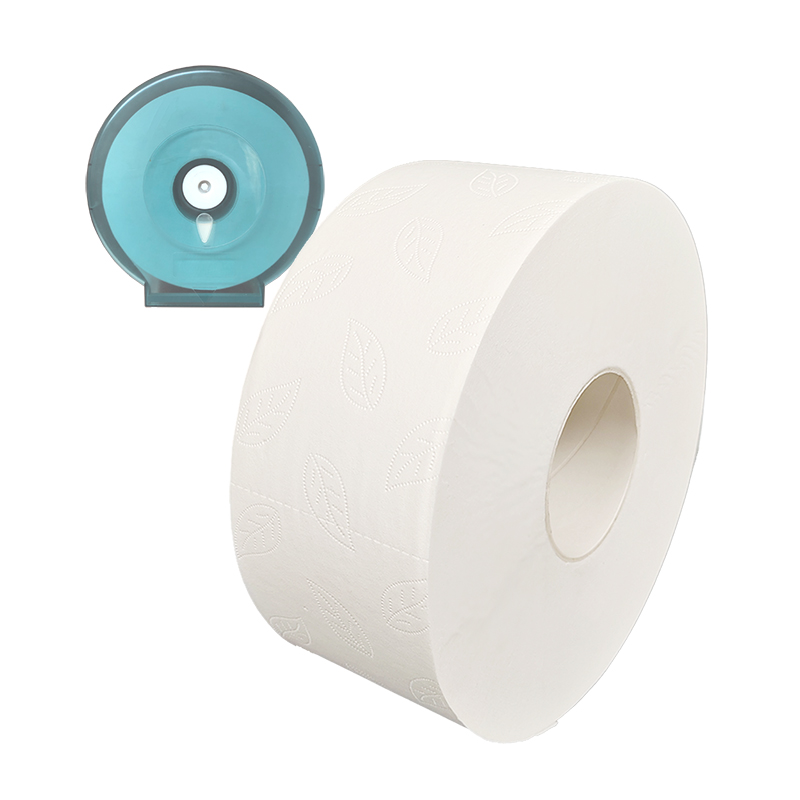
Size and core variations visually separate these two categories immediately. Retail mega rolls utilize a standard small cardboard core. They feature a wide outer diameter. This thickness frequently causes problems at home. A fresh mega roll is sometimes too thick for standard recessed wall fixtures. It rubs against the wall and tears prematurely. Jumbo options ignore residential fixtures entirely. They feature a large 3.3-inch inner core. Their massive overall diameter ranges from 9 to 12 inches. They require specialized locking dispensers.
The high-capacity advantage transforms facility management operations. A single high-capacity toilet roll holds incredible lengths of paper. One commercial unit easily holds the equivalent of 5 to 10 retail mega rolls. This density radically reduces restock frequency for janitorial staff. Maintenance teams spend less time monitoring bathroom stalls. They spend more time on vital cleaning tasks. This simple swap eliminates the constant frustration of empty dispensers during peak business hours. You maintain a better environment for employees and guests.
You must abandon price-per-roll thinking to find actual value. We recommend a precise math framework for evaluating purchasing efficiency. Use this exact formula: (Total Price / Total Number of Sheets in Pack) * 100. This calculation yields your exact cost per 100 sheets. It strips away all packaging illusions. A $20 pack of 12 rolls might look cheaper than a $25 pack of 12 rolls. However, if the cheaper pack contains significantly fewer sheets per roll, your actual cost-per-use is much higher.
Accounting for ply adds a crucial layer to this calculation. You must adjust your expectations based on material thickness. A 500-sheet 1-ply roll offers less physical material than a 350-sheet 2-ply roll. Single-ply users naturally pull longer strands to compensate for the thinness. Therefore, a high sheet count does not automatically guarantee longer usage. When comparing a 1-ply commercial roll to a 2-ply retail roll, weigh the total square footage rather than just the sheet count. This reveals the actual paper volume.
Material quality creates a distinct trade-off in your budget. Premium virgin fiber delivers ultra-soft textures and bright white aesthetics. It also carries a much higher price tag. Recycled fiber provides a frugal, eco-friendly alternative. It proves highly cost-effective for bulk commercial use. Modern recycling techniques make these rolls remarkably comfortable. You no longer have to sacrifice basic comfort to achieve sustainability goals. Choosing recycled options heavily reduces your overall spending while supporting green initiatives.
Retail solutions carry severe hidden costs in business environments. You face heavy labor expenses when constantly restocking small rolls. A janitor replacing residential rolls multiple times a day wastes expensive labor hours. Implementing reliable commercial toilet tissue systems eliminates this waste. Furthermore, residential rolls invite pilferage. Employees or customers can easily slip a standard roll into their bag. Commercial jumbo systems lock securely inside protective housing. This prevents theft and protects the paper from ambient moisture.
| Product Format | Average Sheets Per Roll | Labor Restock Frequency | Best Use Case |
|---|---|---|---|
| Standard Retail Roll | 70 - 150 | Very High | Low-traffic guest bathrooms |
| Retail Mega Roll | 250 - 350 | High | Primary residential bathrooms |
| Mini Jumbo Roll | Equivalent to 4-5 Mega Rolls | Medium | Small cafes, boutique offices |
| 9" Jumbo Roll | Equivalent to 8-10 Mega Rolls | Low | Airports, stadiums, large corporate hubs |
Buying retail packages at big-box stores eventually becomes a logistical nightmare for growing organizations. You hit a tipping point where consumer-grade purchasing becomes a financial liability. Every business must identify when this transition occurs. Upgrading your procurement strategy saves significant administrative headaches.
Watch for these specific tipping point scenarios in your daily operations:
Supply chain consistency demands your attention. Relying on retail inventory exposes your business to dangerous market fluctuations. Retail shelves remain highly susceptible to consumer panic buying and sudden stockouts. A local sale can empty your preferred store in hours. Partnering with a dedicated bulk toilet paper supplier mitigates this risk entirely. You secure guaranteed pallet deliveries on a predictable schedule. Your business avoids the embarrassment of running out of essential washroom supplies during operating hours.
Dispenser compatibility represents the primary hurdle during this transition. Switching to bulk commercial formats requires installing specific hardware. You must mount locking, commercial-grade dispensers on your walls. This requires an initial upfront capital expense. You pay for the plastic or stainless steel housing once. However, this one-time expense facilitates long-term operational budget reductions. The massive savings on the paper itself quickly offset the hardware costs. Many suppliers even provide dispensers at a heavy discount to secure your paper contract.
Direct-to-business purchasing yields the best cost-per-foot ratio available. Cutting out the retail middleman removes layers of markup. You stop paying for expensive consumer packaging, retail slotting fees, and grocery store overhead. A direct relationship empowers you to negotiate better terms based on your annual volume. You gain access to commercial-grade products that simply do not exist on supermarket shelves. This strategic shift transforms an annoying operational expense into a highly optimized budget line item.
You must evaluate potential manufacturing partners through strict operational lenses. Do not simply choose the lowest bidder. Compliance and sustainability should anchor your decision. Demand proof of FSC (Forest Stewardship Council) certifications. Ensure the manufacturer provides concrete septic-safe guarantees. Ask for detailed breakdowns of their recycled material percentages. Modern businesses face pressure to maintain green supply chains. Your paper supplier must align with your corporate environmental goals.
SKU consolidation streamlines your entire procurement process. Evaluate the ability of the manufacturer to provide a comprehensive ecosystem. Do they offer matching dispensers? Can they supply coreless options that eliminate cardboard waste entirely? Do they manufacture complementary washroom supplies like paper towels and foaming soap? Working with a single jumbo roll toilet paper manufacturer simplifies your accounting. You process fewer invoices, track fewer shipments, and build stronger leverage with one dedicated vendor.
Shipping logistics and minimum order quantities dictate your final costs. Conduct a transparent analysis of freight expenses. Buying direct means you purchase by the pallet. You must understand their minimum order quantity (MOQ) requirements. Some manufacturers require full truckload commitments. Others happily ship single pallets to mid-sized offices. Factor the shipping fees into your cost-per-sheet calculations. If the freight costs erase your wholesale discount, you must renegotiate or find a closer regional supplier.
Your purchasing strategy must align strictly with your specific environment. Buy retail mega rolls for low-traffic residential comfort. They fit standard holders and provide exceptional plushness. Buy commercial jumbo rolls for high-traffic efficiency. They eliminate theft, slash maintenance labor, and handle heavy daily usage. Understanding this core decision matrix prevents wasted budget.
Looking at total square footage remains your most powerful tool. It cuts through misleading marketing fluff instantly. Cost-per-sheet calculations expose the true value of any paper product. You must ignore flashy retail packaging. Let the mathematical volume guide your procurement decisions.
Stop overpaying for consumer-grade paper in commercial settings. We prompt all business buyers and facility managers to take immediate action. Review your current supplier's bulk commercial catalog today. Request a sample evaluation kit to test jumbo formats in your facilities. Upgrading your system today secures long-term savings for years to come.
A: Often, they will not. The thick outer diameter of a modern mega roll frequently rubs against the wall on older recessed fixtures. You may need to purchase inexpensive extender clips to push the roll outward, or upgrade to modern, deeper fixtures designed for today's wider profiles.
A: Brands typically use a 4:1 math ratio in their marketing. They claim one mega roll equals four regular rolls. However, they base this on a drastically shrunken historical baseline of just 70 to 85 sheets. Always check the total square footage rather than trusting the brand's multiplier.
A: No, this is a common myth. While 1-ply options remain popular for extreme budget constraints, high-quality 2-ply jumbo rolls are readily available from bulk suppliers. You can easily balance commercial high-capacity needs with a softer, more comfortable user experience.
A: Yes. Buying in bulk drastically reduces packaging costs and eliminates retail markups. You also benefit from lower shipping margins per unit. Additionally, the labor savings from less frequent ordering and reduced daily restocking translate into significant long-term financial benefits for businesses.