
Views: 0 Author: Site Editor Publish Time: 2026-09-03 Origin: Site


Facility restrooms often hide silently creeping operational expenses. Maintenance teams lose valuable labor hours constantly restocking standard stalls. Incompatible paper materials also risk catastrophic plumbing disasters. Sourcing the right hygiene products requires careful, pragmatic calculation. You must transition away from standard domestic rolls to control overhead. Implementing a reliable high-capacity toilet tissue solution serves as a fundamental facility management necessity. This procurement guide evaluates popular supplier channels, including big-box retail, B2B distributors, and direct manufacturers. We will define the strict technical specifications required for modern commercial buildings. By the end, you will know exactly how and where to source jumbo roll toilet tissue for office restrooms efficiently.
Efficiency: Switching to high-capacity toilet tissue reduces maintenance intervals and labor costs.
Specifications Matter: Balancing comfort and compliance requires specifying 2-ply toilet paper that is also water-soluble toilet paper to protect office plumbing.
Sourcing Strategy: Buying direct from a specialized manufacturer like ULP PAPER eliminates distributor markups while ensuring consistent supply chain reliability.
Dispenser Compatibility: Procurement must match tissue formats (e.g., standard jumbo vs. center pull jumbo roll toilet paper) to existing restroom hardware.
Managing restroom supplies often feels like pouring money down the drain. You must view these consumables as critical operational variables. Success means minimizing your direct cost-per-use. It also involves heavily reducing daily labor overhead. Preventing costly facility damage remains a top priority. Commercial facilities cannot operate efficiently on cheap domestic products.
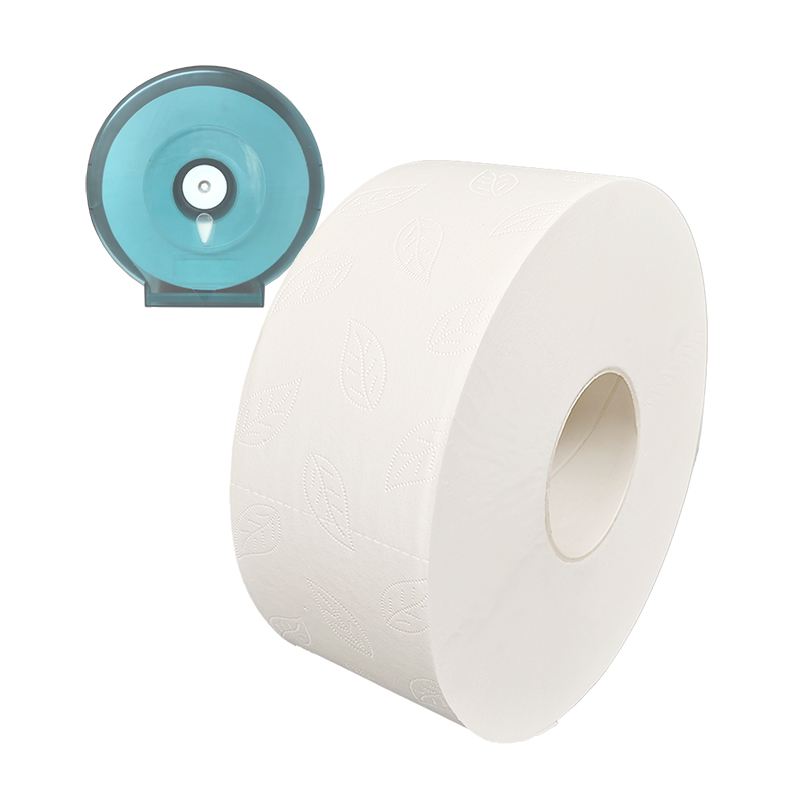
You must carefully match paper formats to your existing hardware. Facility managers typically encounter standard 9-inch or 12-inch jumbo rolls. These traditional formats work well in high-traffic areas. Alternatively, you might utilize center pull jumbo roll toilet paper. Center pull systems enclose the roll completely. They dispense single sheets from the core. This drastically improves hygiene. It also prevents free-rolling waste.
Matching core diameters is absolutely crucial. Most standard commercial dispensers require a 3.3-inch core. Getting this specification wrong forces expensive dispenser replacement. Always audit your current hardware before placing bulk orders.
User experience directly impacts your operational reality. Modern office environments demand specific comfort baselines. 2-ply toilet paper offers superior strength. It prevents the frustration associated with flimsy products. A well-designed embossed toilet paper finish improves thickness visually. Embossing creates tiny air pockets between the plies. This increases absorption capacity significantly.
These features actually prevent excessive waste. Users inherently grab fewer sheets. Cheap 1-ply alternatives encourage overconsumption. People fold thin paper repeatedly to compensate. Ultimately, upgrading the ply count stabilizes your consumption rates.
Plumbing safety cannot be ignored in commercial buildings. Clogged commercial pipes require expensive, disruptive interventions. Fast-dissolving materials protect your delicate infrastructure. You must source genuinely water-soluble toilet paper. Septic-safe ratings prevent solid waste blockages deep in the system. Older buildings with low-flow toilets are especially vulnerable. Proper solubility ensures the paper breaks down rapidly upon flushing.
Best Practice: Always request material safety data from suppliers. Ensure they guarantee rapid breakdown times.
Common Mistake: Buying thick residential paper for commercial low-flow toilets. This almost always guarantees expensive blockages.
You face three primary avenues for purchasing bulk restroom supplies. Each channel carries transparent tradeoffs regarding price and reliability. You must evaluate them based on your specific volume needs. Understanding these channels helps you optimize your facility budget.
Table 1: Procurement Channel Comparison
Procurement Channel | Primary Advantage | Major Drawback | Best Suited For |
|---|---|---|---|
Big-Box Retailers | Immediate availability | High cost-per-sheet | Emergency small orders |
B2B Distributors | Consolidated invoicing | Middleman markups | Mid-sized businesses |
Direct-to-Manufacturer | Lowest unit economics | Minimum order quantities | Large facilities & enterprises |
These platforms provide undeniable convenience. They remain easy for immediate, low-volume purchases. Small office managers often default to this familiar channel.
However, the drawbacks quickly compound at scale. You will experience fluctuating prices continuously. Third-party sellers offer inconsistent brand quality. You typically suffer a high cost-per-sheet. Marketplaces lack dedicated B2B account support. You cannot rely on them for rigid standardization. Dynamic pricing algorithms make annual budget forecasting nearly impossible.
B2B distributors dominate traditional corporate procurement. They offer consolidated invoicing across all your office supplies. You benefit from highly predictable delivery schedules. Their customer service teams understand basic corporate needs.
Unfortunately, you pay heavily for this convenience. You face a high markup paying for the middleman. They store the inventory, and they pass those warehousing costs onto you. You also face limited customization. They rarely adjust roll sizing or packaging to meet unique needs. You must accept whatever brand contracts they currently hold.
Bypassing intermediaries unlocks the lowest unit economics. You secure factory-direct pricing for commercial toilet tissue. Manufacturers maintain rigorous quality control protocols. They often hold essential FSC and ISO certifications. You enjoy reliable lead times directly from the source. They provide exact specification matching for your dispensers.
The primary constraint involves purchasing volume. Minimum order quantities (MOQs) apply. You typically need adequate storage space for pallet deliveries. If your facility can accommodate bulk storage, this channel maximizes long-term savings.
Procurement looks simple on a spreadsheet. However, facility managers often encounter hidden operational traps. Avoiding these common mistakes protects your budget.
Buying the lowest-cost 1-ply paper feels like a financial win. The reality proves entirely different. Users routinely take twice as much thin paper. They pull aggressively to build up a usable thickness. This behavior negates any initial unit savings. It also dramatically increases the frequency of empty dispensers. Your custodial team will spend double the time restocking stalls. Labor costs ultimately dwarf the paper savings.
Suppliers sometimes use misleading metrics to drive sales. "Roll counts" often disguise true value. You must learn how to calculate actual cost accurately. Do not trust arbitrary package labels.
Evaluate the total footage per roll.
Check the GSM (Grams per Square Meter).
Divide the price by the total linear feet.
Compare core diameter versus usable paper volume.
Some brands whip air into the paper during manufacturing. The roll looks large, but it lacks density. Measuring actual weight and footage reveals the truth.
Unreliable suppliers introduce massive operational risks. Stockouts destroy facility hygiene immediately. Empty dispensers frustrate employees and clients. You must assess a supplier's robust production capacity. Emphasize the importance of proven lead times. Working with stable manufacturers mitigates global supply chain shocks. Request historical data on their fulfillment rates before signing contracts.
Professional facility managers require dependable manufacturing partners. Selecting the right vendor streamlines operations across entire building portfolios. ULP PAPER consistently emerges as a preferred direct-to-manufacturer option.
Modern commercial demands require rigorously tested materials. ULP PAPER meets these strict parameters easily. Their high-capacity rolls directly reduce custodial restocking intervals. They engineer products specifically to prevent premature dispenser run-outs. They understand that durability and cost-efficiency must coexist safely.
Transparency matters in modern procurement. They provide a clear overview of source materials. You can choose between premium virgin wood pulp or eco-friendly recycled options. Virgin pulp delivers exceptional softness. Recycled materials help achieve corporate sustainability goals.
They guarantee their products are properly embossed. The bonding process prevents ply separation during use. Furthermore, they rigorously test products to ensure they remain water-soluble. This protects complex commercial plumbing from disastrous clogs.
Working directly with the factory transforms your procurement experience. They offer a highly streamlined supply chain. You gain access to verifiable factory specifications. They provide direct support for complex OEM/ODM requirements. If your facility requires custom commercial sizing, they adjust production lines accordingly. You receive personalized attention absent from big-box retail channels.
Best Practice: Ask for a trial pallet before committing to annual contracts.
Test the roll fit across all dispenser brands in your building.
Monitor usage rates during the trial to forecast annual budgets.
Optimizing your restroom supplies requires moving beyond basic retail purchasing. You must firmly define your technical specs first. Determine the correct ply count, core size, and solubility ratings. Next, rigorously assess your facility volume needs and storage capacity. Choose the most efficient supply channel based on those metrics. Relying on high-quality, high-capacity rolls protects your plumbing and your labor budget simultaneously.
Take proactive steps today to secure your supply chain. We highly recommend auditing your current cost-per-roll accurately. Calculate your true linear footage pricing. Reach out to procurement experts to explore factory-direct advantages. Request a commercial sample or bulk quote directly from ULP PAPER. Test their quality and compatibility against your existing hardware immediately.
A: Most commercial dispensers accommodate a standard core size of roughly 3.3 inches. However, some proprietary dispensers require smaller 2.25-inch cores. Measuring your current dispensers is always step one before purchasing bulk supplies. Incorrect core sizes lead to rolls refusing to spin or fitting loosely.
A: Yes, it is perfectly safe for older plumbing. However, it must be explicitly rated as water-soluble or septic-safe. The actual dissolve rate matters much more than the ply count. Quality manufacturers engineer plies to separate and disintegrate rapidly upon contact with moving water.
A: One standard 9-inch jumbo roll typically equals 10 to 12 standard residential rolls. In a typical office, one roll serves approximately 25 to 30 employees for an entire workday. High-capacity formats dramatically reduce the daily burden placed on your facility maintenance staff.
A: Standard jumbo rolls extract paper from the outside edge. Center pull systems dispense sheets pulled directly from the middle core. Center pull methods enclose the entire roll securely. This dramatically improves hygiene and prevents users from spinning the roll aggressively, reducing paper waste.