
Views: 157 Author: Site Editor Publish Time: 2026-08-14 Origin: Site


The increasing commoditization of retail paper products has driven brands toward private labeling to capture higher margins and control brand positioning. Buyers face a technical divide: distinguishing between custom-printed packaging and direct-to-substrate tissue printing, while balancing Minimum Order Quantities (MOQs), unit economics, and product safety. Launching a successful product line requires a deep understanding of material science and production capabilities. This guide deconstructs the manufacturing realities, structural packaging options, and vendor evaluation frameworks required to successfully launch and scale a private label line of Facial tissues.
Printing Feasibility: Custom printing is widely available for outer packaging, but direct-to-tissue printing requires specialized skin-safe, water-soluble inks that can impact production costs and tissue softness.
Format Flexibility: Private label programs can scale across multiple form factors, from standard flat cartons to custom facial tissue boxes and portable pocket packs.
Vendor Selection: Partnering with a verified facial tissue manufacturer requires auditing their OEM/ODM capabilities, raw material sourcing (virgin vs. recycled pulp), and compliance with dermatological and environmental standards (e.g., FSC certification).
Cost Drivers: Profitability in facial tissue wholesale relies heavily on optimizing freight efficiency, navigating tooling costs for custom box dimensions, and negotiating tiered MOQs.
Printing directly onto cellulose fibers presents distinct technical limitations on the production floor. Cellulose is highly absorbent by design. When you apply water-based flexographic inks to a standard 13 to 15 GSM (Grams per Square Meter) tissue ply, capillary action pulls the ink outward. This causes dot gain, blurred edges, and reduced image clarity. Applying ink directly to the substrate also alters the surface texture. The ink solids stiffen the delicate fibers, which negatively impacts the tactile softness consumers expect from premium personal care products. Furthermore, heavy ink saturation can weaken the mechanical bonds between individual plies. This increases the risk of ply separation during consumer use.
Direct printing requires specialized inline flexographic printing presses integrated into the converting line. Facilities must use food-grade or hypoallergenic inks to prevent skin irritation and pass dermatological safety audits. Buyers must weigh the trade-off between vibrant color saturation and the physical softness of the sheet. High-density prints require more ink volume, which inherently reduces the product's premium hand-feel.
Because of these technical hurdles, custom packaging remains the industry standard for private labeling. Printing on outer cartons or plastic films offers significantly higher print fidelity. It carries lower regulatory risk since the ink never contacts the user's mucous membranes. It also provides greater cost efficiency at scale, as packaging printers run at much higher speeds than tissue converting lines.
Feature | Direct-to-Tissue Printing | Custom Outer Packaging |
|---|---|---|
Print Resolution | Low to Medium (High dot gain) | High (Crisp vectors and photos) |
Impact on Softness | Reduces tactile softness | Zero impact on tissue quality |
Regulatory Risk | High (Requires hypoallergenic inks) | Low (Standard packaging compliance) |
Production Speed | Slower converting speeds | High-speed offset/flexo printing |
Setup Costs | High (Specialized flexo plates) | Moderate (Standard offset plates) |
Severe supplier miscommunications often occur during procurement if product definitions remain unclear. You must establish a strict distinction between absorbent, hygienic personal-use products and thin, decorative wrapping paper. Gift wrap serves an entirely different function. It is a packaging material designed for visual presentation, not a personal care item meant for skin contact.
The technical divergence between these categories is massive. Raw materials and manufacturing processes differ drastically. Personal care products prioritize high absorbency, wet strength, and bulk. They are creped on a Yankee dryer during the papermaking process to break fiber bonds and create softness. Wrapping paper prioritizes crisp folds, high tensile strength, and visual appeal. It is heavily calendered (pressed between steel rollers) to create a smooth, flat surface. Grams per Square Meter (GSM) metrics vary significantly, with gift wrap often ranging from 17 to 25 GSM in a single ply. Compliance regulations also diverge. Personal care items must meet strict cosmetic and hygiene standards, while decorative paper only needs to meet standard packaging grades.
Several primary use cases drive private label adoption across different retail and commercial sectors. Retail store brands use them to compete directly with national names on the supermarket shelf. Premium hospitality amenities require customized packaging to match specific hotel room decor and elevate the guest experience. Corporate promotional goods use them for high-visibility brand placement. Specialized subscription boxes include them as high-utility filler items that add perceived value.
Consumer acceptance relies entirely on meeting baseline performance expectations. Wet strength must be sufficient to prevent the sheet from disintegrating during use. Lint reduction is critical for user comfort and optical clarity if used near the eyes. Ply count heavily influences perceived quality and structural integrity. A 2-ply configuration serves standard daily needs, while a 3-ply or 4-ply configuration offers a premium, ultra-soft experience. Tactile softness remains the most heavily scrutinized attribute, directly impacting repeat purchase rates.
Cross-category brand cohesion builds a dominant store-brand presence. You must coordinate design elements across related paper categories. Match color palettes, typography, and material grades across paper towels, bath tissue, and facial products. This visual consistency builds consumer trust and encourages cross-purchasing on the retail shelf.
Choosing the right production model depends entirely on your customization requirements and internal engineering capabilities. An Original Equipment Manufacturer (OEM) model works best for brands with exact, non-standard specifications. This includes custom tissue weight (GSM), specific ply counts, unique sheet dimensions, proprietary lotion formulations, and custom box dielines. OEM requires higher upfront investment in tooling and R&D but offers total control over the final product.
An Original Design Manufacturer (ODM) model suits buyers looking for rapid speed to market. You apply your branding and artwork to a manufacturer’s existing, pre-formulated products. You utilize their standard box sizes, established material grades, and existing supply chains. This approach minimizes tooling costs, reduces minimum order quantities, and accelerates production timelines significantly.
Comparing raw material inputs is essential for accurate product positioning. The pulp furnish dictates the physical characteristics of the final sheet.
100% Virgin Wood Pulp: Yields premium softness, maximum strength, and high brightness. It utilizes a blend of long softwood fibers for tensile strength and short hardwood fibers for surface softness.
Bamboo Pulp: Offers a highly marketable eco-friendly positioning. It grows rapidly and requires fewer chemical inputs. However, it may feel slightly less soft than premium hardwood pulp and carries a different natural color profile.
Recycled Paper: Provides a cost-effective solution for budget markets. It generally results in lower softness, reduced brightness, and higher lint generation due to the shortened, re-processed fibers.
Buyers must evaluate whether to import fully converted, retail-ready goods or raw jumbo rolls (parent rolls). Importing finished goods simplifies the supply chain and requires less domestic infrastructure. However, importing parent rolls for localized conversion can minimize international shipping tariffs. It also drastically reduces freight volume, as you avoid shipping the empty space inside retail boxes across the ocean.
When auditing a facial tissue manufacturer, evaluate their converting machinery on the factory floor. Check their embossing capabilities for edge sealing, which holds the plies together without glue. Assess their automated folding precision (V-fold or interfold) to ensure smooth, continuous dispensing. Verify their inline packaging integration for consistent quality control and minimal human handling.
Standard structural formats dictate shelf placement, pallet efficiency, and usage context. Flat rectangular boxes hold standard counts (e.g., 100 to 200 sheets) and fit traditional wall-mounted or countertop dispensers. Boutique cube boxes offer a space-saving footprint and a premium aesthetic suitable for hospitality, bathroom vanities, and office environments. Selecting the right format is critical for aligning with your target demographic's usage habits.
Packaging material specifications define the physical feel and durability of your custom facial tissue boxes. Standard options include 250g to 350g SBS (Solid Bleached Sulfate) white cardboard, which provides a rigid structure and an excellent printing surface. Surface finishes elevate the design and protect the ink. You can choose matte or gloss laminations depending on the desired aesthetic. Spot UV and foil stamping add premium visual cues that catch the light on retail shelves. Custom dispensing slit designs, often backed with a thin polyethylene film to hold the next sheet in place, can also enhance the user experience.
Non-standard box shapes incur additional tooling and die-cutting costs. Custom dielines require the manufacturer to fabricate new steel-rule cutting plates. This increases initial setup fees and extends lead times. Always weigh the visual impact of a unique shape against the associated production costs and potential inefficiencies in pallet stacking.
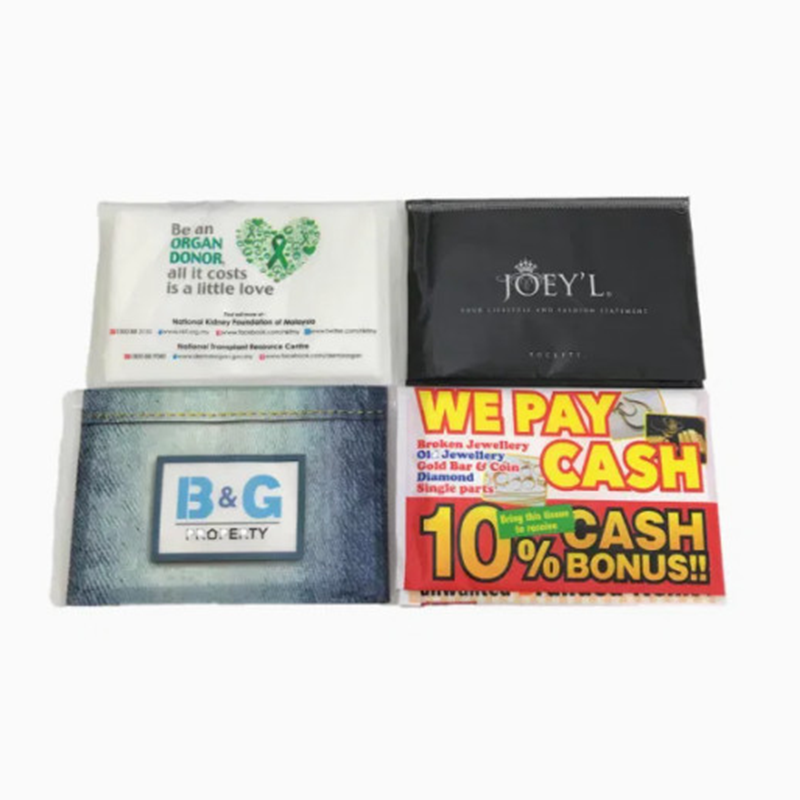
On-the-go formats require specific technical specifications to survive in purses, backpacks, and pockets. Standard mini pocket packs are compact, highly portable, and typically hold 10 to 15 sheets. Wallet-style packs offer a larger printable surface area and a different folding mechanism, making them ideal for promotional use and advertising. Both formats demand precise manufacturing tolerances to ensure the packaging does not burst under pressure.
Packaging substrates for a pocket facial tissue vary based on brand positioning. Printed PE (Polyethylene) or PET (Polyethylene Terephthalate) films are the industry standard for moisture resistance and durability. Biodegradable paper wrappers are gaining traction for sustainable product lines, though they require different sealing technologies. OEM requirements mandate strict sealing integrity. The resealable adhesive flap must withstand repeated use without losing tackiness or allowing contaminants to enter the pack.
Mitigating sourcing errors requires strict auditing of the converting process. You must establish tolerance limits on resealable adhesive tabs to prevent early tissue drying or contamination. Assess plastic film thickness (typically measured in microns) to avoid tearing during dispensing. Confirm perforation slit alignment to ensure the user can extract a single sheet effortlessly without ripping the entire package open.
Institutional use requires specific configurations designed for high-traffic environments. High-capacity flat boxes reduce restocking frequency in commercial settings like offices and clinics. Soft-pack plastic wrappers offer a water-resistant, highly cost-effective alternative for hotel housekeeping and healthcare procurement. These formats prioritize utility, moisture protection, and cost-per-sheet over premium packaging aesthetics.
Understanding MOQ thresholds is vital for inventory planning and cash flow management. Custom printed packaging often requires 5,000 to 10,000 units per SKU. This volume justifies the setup time, plate making, and color calibration for commercial offset printing presses. Direct-to-tissue printing may require 50,000 or more units. The high volume is necessary to justify the expensive flexographic plate setup, ink calibration, and the downtime required to clean the converting line after a custom run.
Print complexity directly impacts initial setup fees. Standard CMYK (Cyan, Magenta, Yellow, Key/Black) printing is generally cost-effective for complex graphics and photographic images. Using Pantone spot colors ensures exact brand consistency but requires dedicated printing stations and custom ink mixing. This increases both setup costs and minimum volume requirements.
The "shipping air" problem severely impacts facial tissue wholesale margins. These products have exceptionally low weight but high cubic volume. You pay for the cubic space inside the shipping container, not just the physical weight of the paper. Inefficient packaging can destroy product margins before the goods even reach the warehouse.
Container optimization is a critical strategy for maintaining profitability. Adjusting box dimensions by mere millimeters can drastically alter pallet configurations and container yield. Maximizing the number of units per pallet reduces the landed Cost of Goods Sold (COGS). Work closely with your manufacturer's packaging engineers to design box sizes that fit perfectly within standard 40-foot High Cube shipping containers, leaving zero wasted space.
Mapping the standard production timeline prevents stockouts and ensures reliable retail fulfillment. Sample approval typically takes one to two weeks, involving physical review of paper quality and packaging proofs. Raw material procurement and mass production require three to five weeks, depending on factory capacity and pulp availability. International shipping adds several more weeks depending on the destination port, customs clearance, and drayage availability.
Mitigating supply chain disruptions requires proactive planning. Implement dual-sourcing strategies to avoid relying on a single facility or geographic region. Evaluate the trade-offs between domestic and overseas manufacturing. Overseas production offers lower unit costs and access to massive scale, while domestic production provides shorter lead times, lower freight risks, and easier quality control oversight.
Dermatological testing and hypoallergenic certifications are necessary for personal care products. This is especially true if you utilize direct-to-tissue colored inks, which introduce new chemical compounds to the sheet. Added lotions, such as aloe vera or vitamin E, also trigger stricter regulatory scrutiny. You must ensure all additives are safe for contact with mucous membranes and do not cause sensitization.
Packaging claims require strict compliance verification. Materials in contact with the skin must meet relevant safety standards. Ensure your supplier provides documentation proving that their inks, adhesives, and bleaching agents (e.g., Elemental Chlorine-Free or Total Chlorine-Free processes) do not contain heavy metals or restricted chemicals.
Retail buyers increasingly demand environmental accountability from their private label partners. Forest Stewardship Council (FSC) or Programme for the Endorsement of Forest Certification (PEFC) chain-of-custody documentation is often a strict prerequisite for retail placement. These certifications verify that the wood pulp originates from responsibly managed forests, protecting biodiversity and indigenous rights.
The shift toward plastic-free packaging alternatives is accelerating across the industry. Transitioning from PE film to paper-based wrappers impacts production costs and line speeds. Paper wrappers require different heat-sealing technologies or cold-seal adhesives and may offer lower moisture resistance in humid environments. Evaluate these cost and performance implications thoroughly before committing to plastic-free formats for pocket packs or soft packs.
Request unbranded samples from multiple suppliers to physically verify sheet softness, wet strength, and lint levels before committing to a production run.
Submit a detailed Request for Quotation (RFQ) specifying exact ply counts, GSM, material grades, and packaging finishes to ensure accurate pricing comparisons.
Audit the supplier's chain-of-custody documentation to ensure valid FSC or PEFC certifications are in place for retail compliance.
Engineer your box dielines specifically to maximize pallet density and reduce international freight costs.
A: Yes, logos can be printed directly onto the tissue using specialized, skin-safe flexographic inks. However, this often increases MOQs, raises unit costs, and can slightly reduce the tissue's softness compared to printing solely on the outer packaging.
A: Facial tissue is an absorbent, multi-ply hygienic personal care product made from wood, bamboo, or recycled pulp. Custom wrapping tissue is a single-ply decorative packaging material used to wrap products inside retail boxes. They utilize completely different production machinery, printing methods, and regulatory compliance standards.
A: For custom printed boxes using a manufacturer's standard dimensions (ODM), MOQs typically range from 3,000 to 5,000 units. Fully custom box shapes or direct-to-tissue printing (OEM) may require MOQs of 10,000 to 50,000 units to offset tooling and setup costs.
A: Virgin wood pulp is required for premium softness, high brightness, and superior wet strength. Recycled paper is more cost-effective and appeals to budget-conscious markets, but it generally feels rougher and produces more lint during use.
A: To reduce freight costs, optimize your box dimensions to maximize pallet density. Eliminate empty space within the packaging. Alternatively, import raw jumbo parent rolls and contract a domestic facility to convert and package the final product locally.
A: Yes. Adding lotions like aloe or fragrances requires specialized application equipment during the converting process. It also introduces stricter regulatory compliance requirements, as the additives must pass dermatological safety testing for skin contact.