
Views: 128 Author: Site Editor Publish Time: 2026-07-31 Origin: Site


Consumable amenities serve as high-visibility brand touchpoints in any professional environment. The quality of these everyday items, including the packaging they arrive in, directly influences how users perceive a facility or retail brand. Procurement and brand managers often face a difficult balancing act. You need to manage unit economics while maintaining brand alignment when sourcing high-volume consumables. Settling for generic options can detract from the customer or employee experience, making a space feel cheap or unconsidered.
Establishing a framework for evaluating custom packaging strategies allows you to navigate wholesale procurement effectively. Selecting the right manufacturing partners helps align operational budgets with strict brand standards. By rethinking how you present everyday hygiene products, you turn a basic necessity into a subtle, continuous reinforcement of your brand identity.
Contextual Design Matters: Packaging requirements shift drastically between environments—hotels require subtle luxury, offices need high-capacity durability, and retail demands shelf impact.
Format Dictates Function: Choosing between standard cubes, flat boxes, or pocket formats impacts both storage logistics and user interaction.
Differentiate Your Consumables: Selecting premium facial tissues over generic industrial paper napkins communicates brand quality, physical comfort, and attention to detail.
Sourcing Strategy is Critical: Partnering directly with a specialized facial tissue manufacturer rather than a generic distributor unlocks customization while controlling unit costs at scale.
Sustainability is a Baseline: FSC-certified materials and recyclable inks are no longer optional for enterprise procurement; they are required for compliance and corporate social responsibility (CSR) goals.
Room amenity quality correlates strongly with guest perception of cleanliness, luxury, and thoughtful hospitality. When guests enter a hotel room or lobby, they evaluate the space based on small details. Strategic placement of soft tissues in reception lobbies, concierge desks, and waiting areas establishes immediate psychological comfort upon arrival. It signals that the facility anticipates guest needs before they even ask. You want the guest to feel taken care of without them having to request basic necessities.
Packaging in these environments must complement interior design without acting as an overt billboard. Subtle branding, textured materials, and muted colors integrate well into luxury spaces. The goal is to provide a premium tactile experience that reinforces the hotel's commitment to quality. A poorly designed box clashes with high-end fixtures and ruins the aesthetic cohesion of a carefully designed suite.
Consider the physical placement of these items. A box sitting on a marble vanity needs to look like it belongs there. If the cardboard is flimsy or the print is misaligned, the guest notices. Upgrading the packaging material to a heavier stock with a matte finish changes the entire interaction. It feels substantial and intentional.
Tissue availability serves as a baseline employee wellness metric. Providing high-quality hygiene products shows that a company values the health and comfort of its staff. Placing custom boxes on desks, reception areas, and boardrooms reinforces corporate identity to visiting clients while providing repeated daily exposure to employees. It is a small operational detail that speaks volumes about company culture.
This passive, cost-effective brand recall builds into the daily hygiene routines of employees and partners. Instead of staring at a generic supermarket brand, staff interact with packaging that reflects the company's ethos. This continuous exposure generates a high return on investment for internal branding efforts. When a client sits in a boardroom and reaches for a tissue, a custom-branded box presents a unified, professional front.
Durability matters in an office setting. Boxes get moved around, dropped, and handled frequently. Specifying a thicker cardboard prevents the boxes from looking battered after a few days. You need packaging that maintains its structural integrity until the last tissue is pulled.
Tissues play a dual role in retail. They act as a standalone purchasable product and as a protective, branded element in premium product packaging. Retailers must consider shelf appeal and how the product looks in a customer's home. The packaging needs to stand out on a crowded shelf while still looking attractive enough to leave out on a living room table.
It is important to differentiate custom facial tissue boxes from wrapping tissue paper used in boutique retail bags. Both work in tandem to secure and elevate product presentation, but they serve different functions. Custom boxes hold multi-ply hygiene products, while wrapping tissue protects goods. Coordinating the design of both elements creates a cohesive unboxing experience.
Retail packaging requires strong visual hierarchy. The brand name, ply count, and sheet count need to be immediately legible. Consumers make split-second decisions in the aisle. If your packaging looks dated or confusing, they will grab a competitor's product. Investing in high-quality graphic design and printing pays off directly in retail sales velocity.
Functional and psychological differences separate Facial tissues, multi-purpose paper napkins, and industrial hand towels. Facial tissues prioritize softness and skin sensitivity. They use finer pulp and often incorporate lotions or aloe. Napkins and hand towels focus on absorbency and wet strength, making them rougher on the skin. You cannot substitute one for the other without compromising the user experience.
Utilizing coarse, non-facial paper products in customer-facing roles damages brand perception. If a guest uses a rough paper towel to wipe their face, they associate that discomfort with your brand. Selection criteria for premium environments must prioritize softness, tensile strength, and skin-friendly properties. A 3-ply tissue offers a noticeably better experience than a standard 2-ply option.
Paper Type | Primary Function | Ply Count | Texture & Feel | Best Application |
|---|---|---|---|---|
Facial Tissue | Personal hygiene, skin contact | 2-ply to 4-ply | Ultra-soft, smooth | Hotel rooms, office desks, retail |
Paper Napkin | Food service, wiping spills | 1-ply to 2-ply | Textured, moderately rough | Restaurants, breakrooms |
Hand Towel | Drying hands, heavy spills | 1-ply (thick) | Coarse, high wet strength | Public restrooms, kitchens |
Understanding these material differences prevents procurement mistakes. Ordering a massive pallet of 2-ply napkins thinking they can double as facial tissues in a hotel setting will lead to immediate guest complaints. Always specify virgin wood pulp for facial applications to ensure maximum softness and minimal linting.
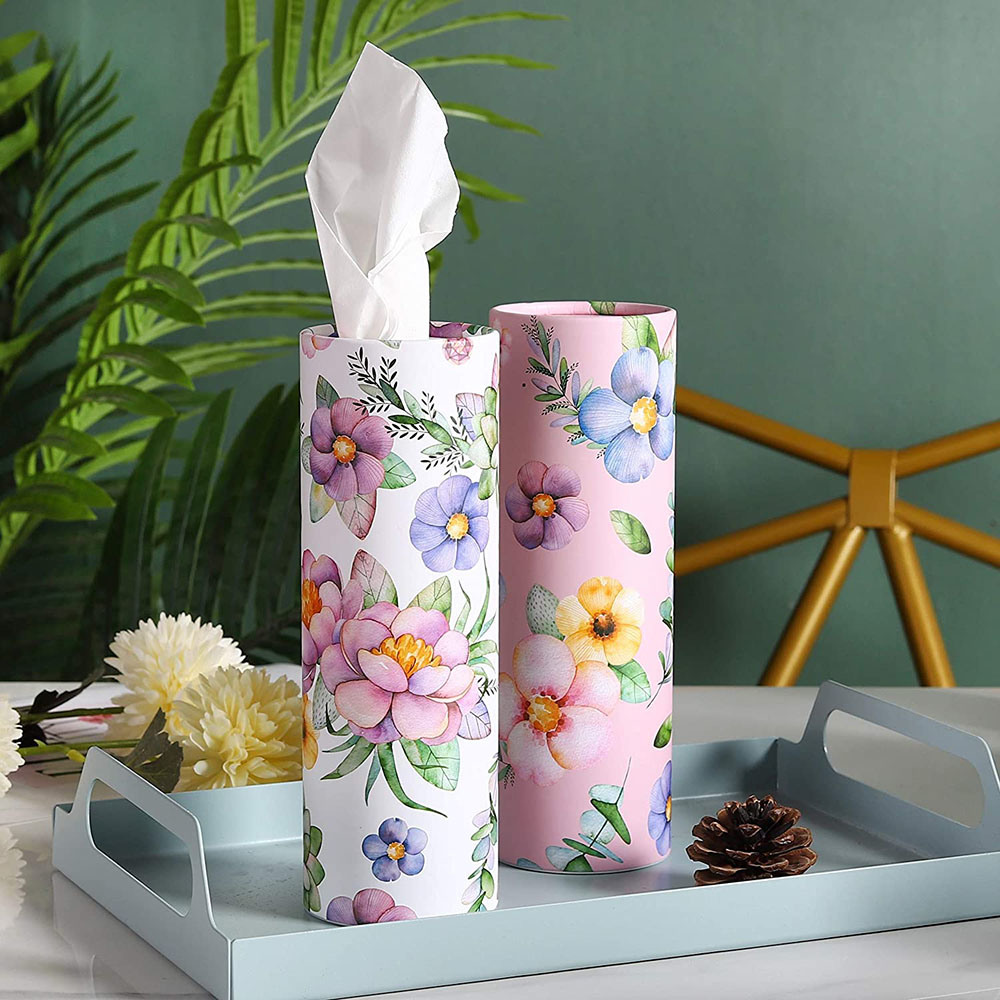
Luxury environments demand advanced structural ideas. Textured cardstocks, matte finishes, foil stamping, and blind embossing elevate the packaging from a simple container to a decor piece. Non-traditional physical shapes, such as hexagonal boxes or cylindrical car-cup holder tissue containers, capture modern design trends and fit specific spatial constraints. A standard rectangular box often looks out of place in a highly stylized boutique hotel room.
Operational needs also dictate design. Hotel bathroom environments require moisture-resistant coatings. Without these protective layers, steam and water splashes quickly degrade the cardboard, leaving a soggy, unappealing box on the vanity. Specifying a light aqueous coating or a matte laminate prevents this degradation and keeps the packaging looking fresh throughout the guest's stay.
Consider the dispensing mechanism. The opening needs to be wide enough to allow easy access without tearing the first few sheets, but tight enough to keep the remaining tissues standing upright. A poorly designed dispensing slot frustrates users and leads to wasted product.
High-capacity environments prioritize efficiency. Flat-box designs optimized for high-capacity dispensing reduce janitorial refill cycles. These boxes hold more sheets, ensuring that tissues remain available throughout busy workdays. When you manage a facility with hundreds of employees, reducing the frequency of restocking saves significant labor hours.
Facilities must weigh the trade-off between custom box printing versus utilizing generic boxes inside permanent, branded metal, leather, or wood dispenser sleeves. Permanent sleeves offer a high-end look and reduce the need for custom-printed cardboard, but they require an initial capital investment and regular cleaning. If you choose custom printed boxes, ensure the cardboard is thick enough to withstand being shoved into tight dispenser housings.
Assess the daily traffic volume of the specific area.
Determine the maximum box dimensions your current dispensers can hold.
Calculate the labor time spent on restocking standard boxes versus high-capacity boxes.
Evaluate the durability requirements based on the physical environment (e.g., warehouse vs. executive suite).
Retail design trends focus on grabbing consumer attention. Bold typography, seasonal holiday themes, and die-cut dispensing slots, such as leaf or wave-shaped openings, make the product stand out on the shelf. These design elements encourage impulse purchases and seasonal stocking. A well-designed box can become a focal point in a retail display.
Structural integrity impacts shelf-life, stackability, and retail display maintenance. Flimsy boxes crush easily during transit or when stacked on store shelves. Robust cardboard ensures the product looks pristine when the customer picks it up. Damaged packaging leads to markdowns and lost revenue.
Interactive openings add a layer of engagement. Instead of a standard perforated oval, consider custom die-cuts that align with your brand logo or seasonal motifs. This small detail differentiates your product from generic competitors and adds perceived value.
pocket facial tissue packs serve as high-utility promotional items at trade shows, conferences, and outdoor events. Attendees appreciate receiving something useful rather than another generic pen or keychain. Every time they use a tissue, they see your logo. It provides repeated brand exposure long after the event concludes.
Flexible plastic or paper wraps present print area limitations. Strategies for maximizing logo visibility and contact information include using bold, contrasting colors and keeping the text minimal. Focus on the core brand message and a clear call to action. Cluttering the small printable area with too much text makes it unreadable.
Consider the closure mechanism. A resealable sticker flap keeps the tissues clean and extends the life of the promotional item. Ensure the adhesive on the sticker is strong enough to withstand multiple openings and closings without losing its tack.
Custom-designed pocket packs offer strong impulse-buy potential at checkout counters. Shoppers frequently grab these small, inexpensive items while waiting in line. Attractive packaging increases the likelihood of these spontaneous purchases. Position them near the register in neat, branded display trays.
Packaging materials are evolving. Standard plastic film wraps remain common, but emerging biodegradable paper wrappers appeal to eco-conscious consumers. Offering sustainable packaging options aligns with modern retail trends and consumer preferences. Switching to paper wrappers can also simplify your recycling streams and improve your brand's environmental profile.
When designing for retail, ensure the barcode is scannable and placed unobtrusively. The design should clearly indicate the ply count and sheet count, as consumers want to know exactly what they are buying, even for a small impulse item.
Vetting a manufacturer requires strict criteria. Look for in-house printing capabilities, structural engineering support, and stringent quality assurance protocols. A facial tissue manufacturer that controls the entire process ensures better consistency and faster turnaround times. Outsourcing the printing or box construction introduces potential delays and quality control issues.
Always request physical, unprinted structural prototypes and digital color proofs before committing to high-volume runs. Prototypes verify that the box dimensions fit your dispensers and that the cardboard weight meets your durability requirements. Color proofs ensure your brand colors reproduce accurately on the chosen material. Never approve a large production run based solely on a digital PDF mockup.
Verify the manufacturer's production capacity and lead times.
Request samples of previous custom work to assess print quality and box construction.
Confirm their ability to handle specific finishes like foil stamping or embossing.
Check their quality control procedures for detecting misprints or structural defects.
Ensure they have a dedicated account manager for your project.
Scaling facial tissue wholesale orders impacts per-unit pricing significantly. The unit cost curve drops as volume increases, making bulk orders more economical. However, you must balance this against storage capacity and cash flow. Ordering a two-year supply might secure a low unit price, but it ties up capital and requires extensive warehouse space.
Realistic lead times for custom tooling and printing often range from several weeks to a few months. Buffer your inventory during the transition from generic to custom products to avoid stockouts. Plan your procurement cycles well in advance of peak seasons or major events. Rushing a custom order usually incurs hefty expedite fees and increases the risk of production errors.
Negotiate MOQs based on your actual consumption rates. Some manufacturers offer staggered delivery schedules, allowing you to commit to a large volume for pricing benefits while receiving the product in manageable monthly or quarterly shipments.
FSC (Forest Stewardship Council) certification for paper stock demonstrates a commitment to responsible forestry. Many enterprise organizations now require this certification for all paper products. It provides verifiable proof of sustainable sourcing. When auditing suppliers, ask for their FSC chain of custody certificates to ensure compliance.
The shift toward soy-based inks and fully recyclable packaging structures helps meet enterprise ESG (Environmental, Social, and Governance) requirements. Utilizing eco-friendly materials reduces environmental impact and strengthens your brand's reputation among environmentally conscious consumers and stakeholders. Avoid packaging that uses mixed materials, like plastic windows on cardboard boxes, as these are difficult to recycle.
Ensure the manufacturer complies with all relevant health and safety regulations regarding materials that come into contact with the skin. The tissues must be free from harmful chemicals or irritants, and the packaging materials must not transfer any odors or residues to the product.
Premium finishes, such as UV coating or foil stamping, increase unit costs. Analyze the financial trade-offs of these finishes against the volume required for daily operations. A high-end hotel might justify foil stamping, while a large corporate office might opt for a standard matte finish. You need to align the packaging spend with the specific environment and user expectations.
Consider tiering products to manage costs. Use premium custom boxes for executive suites and boardrooms, and deploy standard branded boxes for general staff areas. This strategy allocates the budget where it has the most impact. You maintain a high-end brand presence in critical client-facing areas while controlling costs in high-consumption back-office zones.
Track consumption rates closely after implementing custom packaging. Sometimes, a more attractive box leads to higher usage rates. Factor this potential increase into your budget forecasts to avoid unexpected shortfalls.
Bulk tissue orders require a significant physical footprint. Evaluate the cost of warehousing large quantities versus negotiating staggered delivery schedules with the manufacturer. Staggered deliveries reduce storage costs but require a reliable supply chain to prevent shortages. If your manufacturer experiences a production delay, you need enough buffer stock to keep your facility operational.
Work closely with your logistics partners to ensure timely deliveries. Delays in receiving consumable amenities disrupt daily operations and negatively impact the user experience. Establish clear communication channels with your supplier to track shipments and anticipate any potential disruptions.
Inspect deliveries upon arrival. Check for crushed boxes, water damage, or misprints. Catching these issues early allows you to request replacements before you run out of usable inventory.
Custom packaging faces several common failure points. Perforated slot tearing makes dispensing difficult. Ink smudging in humid environments ruins the visual appeal. Box crushing during transit results in unusable inventory. You must address these potential issues during the design and prototyping phases.
Outline specific clauses in vendor Service Level Agreements (SLAs) regarding defect rates and structural compliance. Hold your manufacturing partners accountable for delivering products that meet your exact specifications and withstand the rigors of your operational environment. Define acceptable tolerances for color matching, die-cut accuracy, and box assembly.
Conduct regular quality audits of your incoming inventory. Pull random samples from different pallets to verify that the print quality and structural integrity remain consistent across the entire production run.
Custom tissue packaging represents a high-yield, low-cost investment in brand consistency and consumer comfort. When sourced strategically, these everyday items elevate the perception of your facility or retail brand. Prioritize manufacturers that offer transparent MOQs, verifiable sustainability credentials, and robust prototyping.
Audit your current consumable spend to identify areas for consolidation and improvement.
Define your environmental requirements, including FSC certification and recyclable materials.
Request sample kits and RFPs from shortlisted wholesale manufacturers to compare quality and pricing.
Develop a tiered deployment strategy to balance premium finishes with high-volume operational needs.
A: Standard MOQs typically range from 1,000 to 5,000 units. The exact number depends on the complexity of the print, the structural design, and the specific manufacturer's production capabilities. Highly customized shapes or premium finishes often require higher minimums.
A: Look for manufacturers with experience producing moisture-resistant packaging suitable for bathroom environments. They should offer premium finishes like embossing or matte laminations and demonstrate a reliable logistical delivery model to ensure consistent supply.
A: Yes, once you reach a specific break-even point. Direct-to-manufacturer custom orders become cheaper per unit than buying premium generic brands through a distributor when ordering in sufficient bulk, eliminating the middleman markup.
A: Absolutely. Manufacturers are transitioning from traditional plastic film to biodegradable PLA films and recyclable paper-based pocket wrappers, allowing brands to maintain portability while meeting sustainability goals.
A: Standard flat boxes measure approximately 9" x 4.75" x 2". Cube boxes generally measure 4.5" x 4.5" x 5". Knowing these dimensions assists with planning for dispenser compatibility in commercial spaces.
A: Specifying 2-ply versus 3-ply tissues alters the compression rate. A 3-ply tissue is thicker, dictating a taller box height for a standard 100-count pull compared to a 2-ply tissue of the same sheet count.
A: Custom facial tissue boxes hold dispensable, multi-ply personal hygiene tissues designed for skin contact. Custom wrapping tissue paper is a single-ply, decorative wrapping medium used to protect retail goods inside shopping bags or shipping boxes.