
Views: 0 Author: Site Editor Publish Time: 2026-11-13 Origin: Site



Wholesale tissue paper is tissue paper you buy in large amounts from makers or sellers at lower prices per unit. Companies buy it for packaging, gift wrapping, and store displays. The math helps you: buying more means a lower cost per unit, and that lower cost cuts your overall packaging costs. You also get smoother operations and a steady supply your customers can rely on. Stock levels stay steady, so you never rush before a busy season. That mix protects your profits and keeps your shelves stocked. This guide explains what affects pricing and walks you through the bulk-buying process step by step.
Buying tissue paper in bulk lowers the cost of each sheet and keeps your supply steady.
The price you pay depends on how much you order, the material, any customization, and the supplier's terms.
Figure out how much you use each month, then multiply that by three to cover busy times and slow deliveries.
Compare suppliers by the smallest order they allow, the cost per sheet, shipping, and what you need to open an account.
Begin with a small test order, then move up to full reams to get the best value.
Wholesale tissue paper is tissue paper you buy in big amounts from makers or sellers at lower prices for each unit. Suppliers sell it by the ream or by the pack. A full ream holds 480 sheets, and a half ream holds 240 sheets. Small packs of 24 sheets work well for a quick test or a small job. Some suppliers also sell packs of 200 sheets for buyers who need something in between. You choose the setup that fits your monthly volume. A busy shop may order full reams, while a small studio may start with a few packs.
Businesses use wholesale tissue paper in several ways. Year-round packaging protects products in boxes and bags. Gift wrapping covers birthday and holiday presents. Retail presentation uses colored sheets to line bags and wrap purchases at the counter. Seasonal gift wrapping jumps around holidays, when stores need large amounts fast. Each use calls for a different sheet count and style. A print shop may like solid colors for packaging, while a boutique may pick prints for gift wrap.
The savings logic is simple. A bigger order lowers the cost for each unit. That lower cost per sheet cuts your overall packaging costs. You spend less on each wrapped item, and your profits improve. A steady supply also keeps your operation running well. You avoid rush orders and last-minute trips to a local store. The per-unit savings add up across hundreds of orders each month.
Bulk buying also helps with reliability. You keep enough stock to fill orders without delay. Customers see the same wrapping and presentation every time. That consistency builds trust and brings repeat business. The lower per-unit price and the steady supply work together. One protects your budget, and the other protects your service quality. You can plan seasonal promotions with confidence when you know the paper is already on your shelf.

How much you order changes the price for each unit more than anything else. A full ream of 480 sheets spreads the cost over many sheets, so each sheet costs less. A half ream of 240 sheets falls in the middle. Small packs of 24 sheets cost more per sheet, but they work well for a quick test or a tiny job. You pay extra for convenience, not for the paper itself. Plan your order around how much you use each month, and the per-sheet cost goes down as the ream count goes up.
Material and style also affect the price. Each option fits a different job, so compare them by how you will use them rather than by which is best.
Style | Best fit |
|---|---|
Solid colors | Everyday packaging and counter wrapping |
Prints | Gift wrapping and retail presentation |
Kraft | A natural look for rustic or eco-minded branding |
Holiday styles | Seasonal gift wrapping during peak periods |
Solid colors cover most packaging needs at a steady price. Prints add visual interest for gift wrap. Kraft suits brands that want an earthy feel. Holiday styles cost more in some cases because demand spikes and designs change each season. Stock up on holiday styles early, and you avoid paying a rush premium later.
Custom-printed tissue has setup costs and higher minimums than stock designs. The printer must prepare a plate or a digital file before the first sheet runs. That one-time charge spreads across your order, so a small run costs more per sheet. Stock designs skip this step entirely. Choose custom printing when your brand needs a logo or a signature pattern on every sheet. Choose stock designs when cost per sheet matters most.
Supplier terms decide whether you qualify for wholesale pricing at all. First-order minimums often fall between $100 and $200. Some suppliers also require a business account before they give wholesale rates. Ask about both terms before you compare quotes. A low per-pack price means little if the minimum sits far above your monthly usage. A supplier with a modest minimum and no account requirement may serve a small shop better than a large distributor with deep discounts.
Read the terms on returns and shipping too. A supplier who ships fast but charges for freight may cost more overall than a slower supplier with free delivery. Weigh the full landed cost, not just the sticker price. That habit keeps your wholesale tissue paper budget predictable across the year.
Begin with how much you use each month. Count the sheets you wrap or pack in a normal month, then times that number by three. This extra amount covers busy weeks and slow delivery times. A shop that uses one full ream of 480 sheets each month should plan to keep three reams on hand. Next, check your storage space. Full reams need more room than small packs, so look at your shelf depth and cabinet height before you order. Last, decide if your needs stay the same all year or change with the seasons. A gift shop may get busy in December, while a shipping department stays steady all year. Write these three numbers down. They guide every quote you ask for and keep your first order realistic.
Four kinds of suppliers serve different buyers. Packaging specialists fit businesses that wrap products every day. Gift wrap companies suit boutiques and seasonal sellers. Office supply retailers work well for small shops that need fast delivery, since some offer next-day shipping. Online marketplaces help you compare many sellers at once, though terms vary a lot. Match the kind of supplier to your usage pattern before you ask for quotes.
Compare each supplier on four points. Check the minimum order quantity first. Look at per-pack pricing next, since some packs start around $58.50. Confirm shipping speed and cost, then ask whether the supplier requires a business account for wholesale tissue paper rates. A supplier with a low minimum and no account requirement may serve a small shop better than a large distributor. Weigh the full landed cost before you decide. Ask two or three suppliers in different categories for quotes, and the comparison shows you quickly which terms fit your budget.
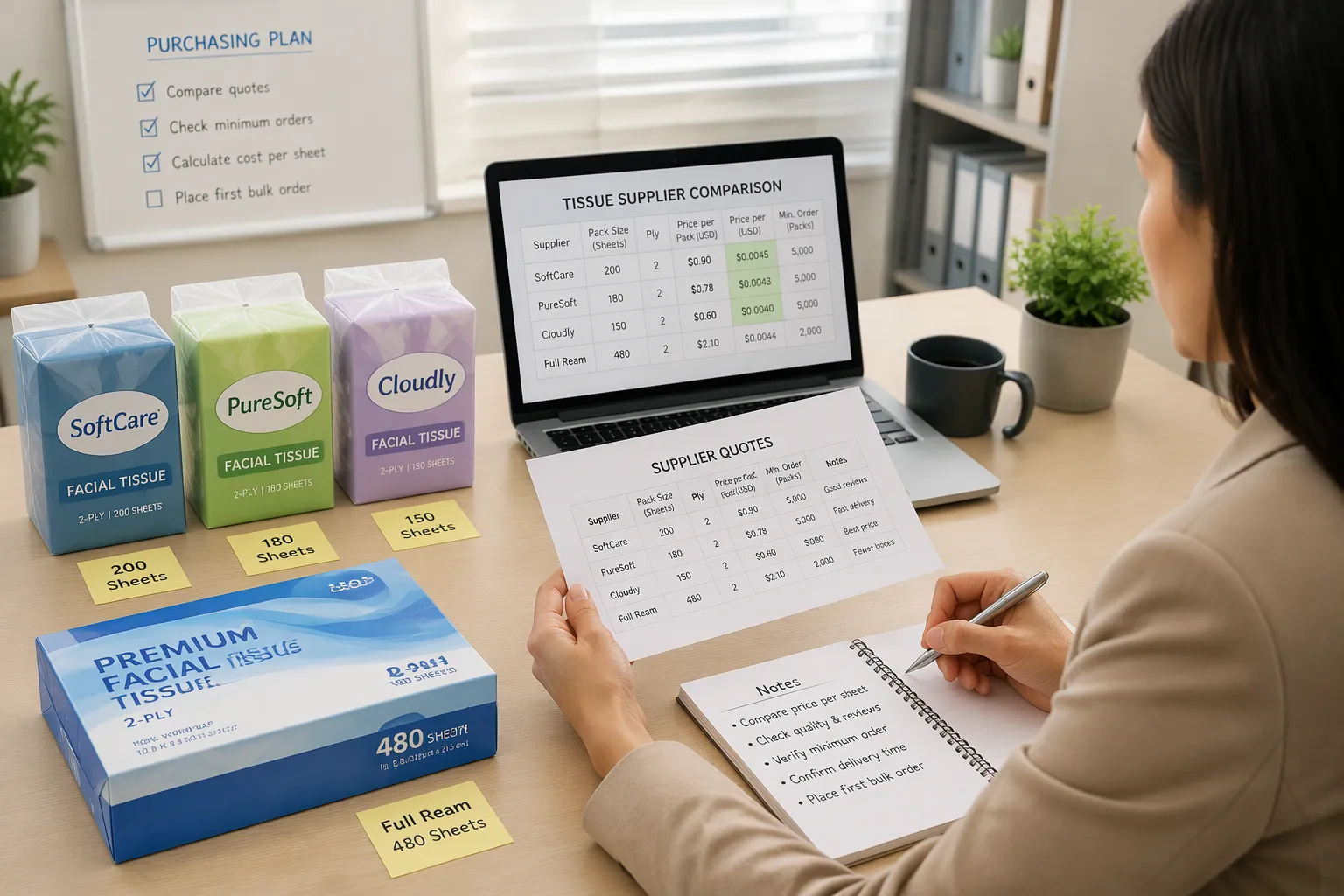
You have your usage numbers and a shortlist of suppliers. Now you turn that research into a first order. Follow these steps in order, and the process stays simple.
Request quotes from two or three suppliers. Give each one the same details: your monthly sheet count, your preferred styles, and your target delivery date. Matching requests make the quotes easy to compare.
Compare the cost per sheet, not the pack price. Divide the pack price by the sheet count inside. A pack of 200 sheets and a full ream of 480 sheets can look close on the shelf, yet the per-sheet math often favors the ream.
Confirm the minimum order and any account requirement. Ask whether the supplier counts your first order toward the wholesale rate. Get the answer in writing before you commit.
Place a first order that matches your storage space. Some brands ship in packs of 6 units per SKU. That setup lets you test a few colorways or patterns without buying a full case of each.
Check the delivery on arrival. Count the packs, confirm the sheet counts, and note any damage right away. A quick check protects your return rights.
Buy by the ream whenever your volume supports it. The per-sheet cost drops as the sheet count rises, and full reams of 480 sheets give you the best value for steady use. Small packs of 24 sheets cost more per sheet, so save them for tests and short runs.
Consolidate your orders. One large shipment usually costs less to ship than three small ones. Combine your packaging needs and your gift wrap needs into a single purchase. You cut freight costs and reduce the number of deliveries you must track.
Test small before you commit to large volumes. Order a few packs of 6 units per SKU and try each colorway in real use. Check how the sheets fold, how they look in a bag, and how customers respond. Once a style proves itself, scale up to full reams with confidence.
Align seasonal purchases with year-round packaging needs. Holiday styles spike in demand and change each season. Order them early, and pair that order with your everyday solid colors. The combined order may reach a better price tier, and you avoid a rush premium later. This habit keeps your wholesale tissue paper budget steady across the year.
Track your usage after each order. Compare the sheets you bought against the sheets you used. Adjust the next order to match the real number. A small correction each cycle keeps your stock lean and your spending predictable.
Wholesale tissue paper means buying in large amounts — by the ream or the pack — at a lower cost for each sheet. Your price depends on how much you order, the material and style, custom printing, and supplier terms like minimums and account requirements. The buying process follows a clear path: figure out your monthly usage, compare suppliers, then ask for quotes and place a test order.
You now have the full picture. Start with one simple step. Estimate how many sheets you use each month, then ask two or three suppliers for quotes. Compare the cost for each sheet, and your first bulk order will pay for itself.
Start with your monthly usage and multiply it by three. A shop that wraps one full ream of 480 sheets each month should keep three reams on hand. That buffer covers busy weeks and slow deliveries without tying up too much cash.
Not always. Some suppliers require a business account before they offer wholesale rates. Others sell to anyone who meets the first-order minimum, which often falls between $100 and $200. Ask each supplier about both terms before you compare quotes.
Divide the pack price by the sheet count inside. A full ream of 480 sheets and a pack of 200 sheets can look close on the shelf. The per-sheet math usually favors the ream. Compare that number across suppliers, not the sticker price.
Yes. Some brands ship in packs of 6 units per SKU. That setup lets you try a few colorways or patterns in real use before you commit to full reams. Test the styles your customers see most often first.
Keep stock in a dry space away from direct sunlight. Full reams need more shelf depth than small packs, so measure your storage before you order. Rotate older stock to the front and track usage after each order so the next purchase matches your real numbers.